Unknown's avatar

The Project Paradigm: How To Choose Your Work In A World Of Abundance

In today’s world, we have an enormous amount of possible projects to choose from. To be successful, we need to develop new tools to navigate this huge set of choices. In this post I share a method I personally started to use – the project paradigm.

Just two generations ago, careers were very linear. You were trained to become a mechanic, a doctor or an engineer and sticked with that job for most of your life. Of course, there were adventurers who traveled to foreign countries, but they were few and far between. The world was nicely organized.

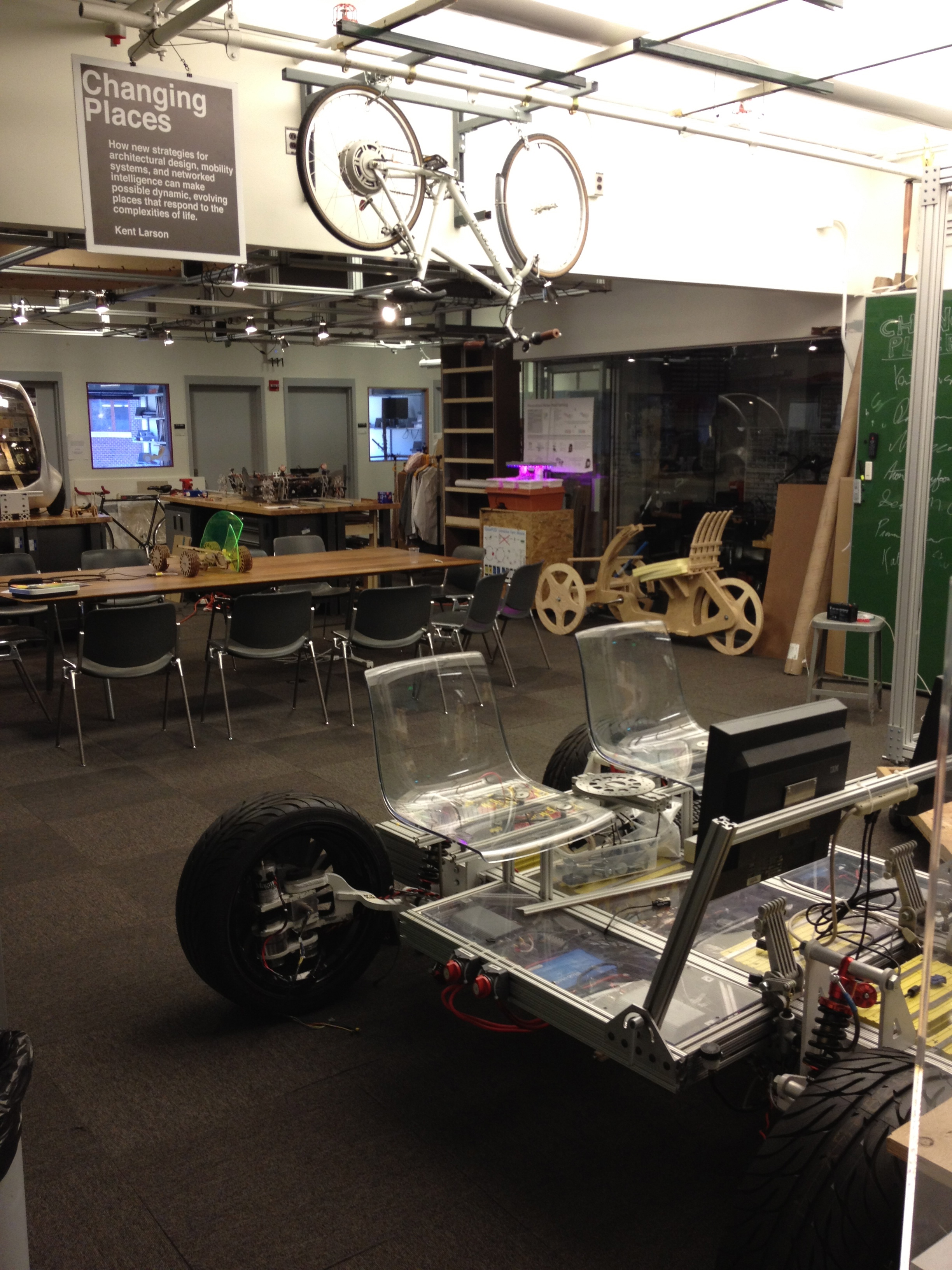
Today, things are slightly more chaotic. In project-world, changing projects have become the norm and lifelong jobs the exception. The exponential growth of technology has made the world flat. With that increased connectivity and productivity, we can virtually start anything we can dream of and build it in a very short time. Goodbye cog-and-wheel, hello changing places!

With this tremendous increase in opportunity, the ability to choose between projects becomes critically important. Our old compass – find a nice position in a trustworthy company, be loyal – is no guarantee to success today. I want to share with you one of the solutions I implement: the project paradigm. A set of simple, but fundamental, questions I ask myself before the start of each project.

Be aware: the paradigm is highly personal. When you read the questions below, please reflect whether you find them of critical personal importance. I try to undertake only projects for which I can answer a confident “Yes!” to all questions.

  1. Will I work with a great team? Do we share the same values, commitment and ultimate goal? Do we have awesome & complimentary skills?
  2. Does the project deliver true value to its customers? Does the project bring joy, pleasure, wisdom or excitement to people?
  3. Is the project’s outcome ridiculously ambitious and unreasonable? Do I need to take actions that I fear?
  4. Is the project scalable? Can we capture the value we deliver to our customers?
  5. Can customers participate in the project? If people care about the project, can I provide the tools for them to join and evangelize?
  6. Does the output fit with the person I want to be in life? Is the project’s story one I am proud to share?

Like every other experimental result, your paradigm needs to be calibrated. Think about a project that you truly loved, and assess whether it passes all questions of your project paradigm. If not, your set of questions may be incorrect or – important! – may have evolved over time.

I hope the method above is useful to you. If you have any thoughts or suggested changes, please share them with me. Also, if you use different tools to choose projects – or trust only on your gut – let me know also, I am keen to learn how others make their decisions.

Looking forward to hear your responses – please post them at the bottom of this article or email me.

Unknown's avatar

What makes MIT such a great school?

So far, I have had a blast during my time here in Boston. I have never had such a smooth landing upon moving to another country. MIT and the surrounding Cambridge area compose a truly wonderful place to live – and a stimulating environment to work in. But why is it that MIT is such a breeding ground for new ideas, projects and companies? Below some of my thoughts, triggered by a conversation with my thesis supervisor, prof. Richard de Neufville.

  • An open and flat culture

Whether you’re a freshman or a faculty-director, anybody can approach everybody at MIT for a serious discussion. People are not judged on their seniority, but on their true merit (ideas, discipline and skills). Upon entering a conversation, more senior MIT faculty will assume you have seriously thought about what you’re proposing, even if you’ve just entered MIT a week ago.

This leads to a healthy knowledge exchange system, where feedback and improvement suggestions are valued irrespective of their source and innovative ideas are celebrated.

  • Students are trained to become “builders”

At my home university, TUDelft, most students are expected to spend 5 years — most often more —  analyzing complex problems. Designing and building practical solutions is something few students outside the Industrial Design & Architecture faculties find the opportunity to do. “Practical work” — the idea of a Polytechnic school — is something European engineering schools look down upon, and I believe this is a fundamentally flawed perspective considering the needs of society.

At MIT, students are expected to be able to build things with their hands. In the past two weeks, I’ve met MIT students who’ve built biodiesel production units; engineered dress shirts or created energy generating shock absorbers. I have made friends with people who developed software applications to teach children how to read; built electric vehicles half the size of a Smart for use in future cities and girls who’ve manually constructed their own computers.

Of course, within MIT there are some faculties which are particularly good at fostering development 0f these skills (such as the D-lab and the Medialab), but the “builder” characteristic is something I’ve observed in the majority of undergraduates and masters students at MIT. By creating a culture of “let’s prototype a solution, and see how it works”, students are ready to tackle real-world solutions when they graduate and they leave with the healthy framework of rapid prototyping.

  • Large autonomy over research and work

Related to the open culture, is the autonomy of professors, post-docs and others to research what fascinates them. Rather than having a top-down structure that subscribes people what to look into, there is a freedom of choice.

Because the quality of the people at MIT is superb, this leads to a very interesting set of research areas. At the MIT Medialab for example, approximately 30 research groups have come into existence, with names as Lifelong Kindergarten, Tangible Media and Viral Spaces.

Since arriving at MIT, this has given me the fundamental feeling that whereas most engineering schools look at the problems of the present, MIT’s research focuses on the problems of the future: looking a decade — or significantly longer — into the future of society.

  • Triggers to develop interests widely (and wildly)

In the American undergraduate system, engineering students spend the first year-and-a-half taking a diverse set of courses, ranging from physics and math to humanities and biology. Only after immersing themselves in a large set of courses, are students required to choose a major for the remaining two-and-a-half years – and during that time they are still expected to continue exploring their interests in all directions.

So far, these MIT-characteristics have given me the feeling that the engineers who graduate here are ready to bring improvement to the world, and that they leave their Institute with a well-founded background and a toolbox filled with useful skills. I am sure the aspects discussed above are not exhaustive, so please add your personal views below.