Unknown's avatar

Fear: false evidence appearing real

Do you ever have a voice inside your head that tells you that you are not good enough to start your company; not good enough to sell to a new customer; not good enough to solve a difficult math problem? This is the voice of self-doubt, judging and fear – also called “the resistance” by Steven Pressfield.

It is easy to think this voice is your own – it speaks in your own head, after all. Once you recognize this voice does not encompass “you”, you can act when fear strikes.

The next time you hear a voice inside your head saying “You’re not good enough” or “This will never work”, imagine this voice comes from a friend inside your head. Say “Thank you for the advice, feel free to speak more, but you are not the one calling decisions.” The voice will not (maybe never) disappear. But, by realizing that the voice does not make decisions for you, you can start acting in the face of reality.

Writing down the advice was inspired by Justin Rosenstein, who speaks about this topic in his talk at Stanford Entrepreneurship Ventures. [Podcast here]


I must not fear.

Fear is the mind-killer.

Fear is the little-death that brings total obliteration.

I will face my fear.

I will permit it to pass over me and through me.

And when it has gone past I will turn the inner eye to see its path.

Where the fear has gone there will be nothing.

Only I will remain.

– Frank Herbert
Unknown's avatar

On the Good Life

If a man ascended into heaven and gazed upon the whole workings of the universe and the beauty stars, the marvelous sight would give him no joy if he had to keep it for himself

– old Roman saying.

I had the pleasure to spend the last weekends traveling Europe. In Zurich, Belgium and London, I found myself surrounded by beautiful friends who truly made me feel at home. What would life be without friends? Below some reflections taken from Cicero’s “On the Good Life”:

Friendship can only exist between two good men.

When a man thinks of a true friend, he is looking at himself in the mirror. Even when a friend is absent, he is present all the same. However poor he is, he is rich: however weak, he is strong. […] Even when he is dead, he is still alive. He is alive because his friends still cherish him, and remember him, and long for him. This means that there is happiness even in his death – he ennobles the existences of those who are left behind.

A good man is attracted by other good men; he wants to annex them for himself.

Scipio’s greatest wish was that all his friends should gain, not lose, in stature because of their association with himself.

You ought to give each of your friends just as much assistance as you have the capacity to provide.

Unknown's avatar

What is happiness?

We act as though comfort and luxury were the chief requirements of life. All that we need to make us happy is something to be enthusiastic about.

by Albert Einstein

Projects that we care about allow us to live life in full intensity. We spend too much of our time on things that are insignificant looking years back. I want to try to govern my actions by a simple, powerful question: “Is this everlasting?”.

Unknown's avatar

Why do solutions cluster around a handful of problem areas?

Education is a popular problem-area for start-up founders these days. I see friends build companies that assist you in learning a language; help you with your dyslexia or allow you to train for your final exams online. Is the problematic state of education today the explanation for the surge in ideas? I don’t think so. I think education is a popular area for start-ups now because types of solutions are becoming possible that can address the problems in education. It is not a bigger problem that leads to new ideas; it is a more appropriate set of solution building blocks.

I believe education is popular today because of the adjacent possibilities. A jump in computer penetration in classrooms; the possibility to stream videos from one brilliant teacher to every schoolgirl with access to internet; and advances in video games and visualization have enabled solutions for problems that existed for years or decennia.

To come up with brilliant solutions, you don’t dream up future scenarios out of thin air – you use building blocks that are (becoming) available.

Unknown's avatar

What to do?

Dear Michael,

Thank you very much for your recent letter concerning “thinkers and doers.”

The things to do are: the things that need doing: that you see need to be done, and that no one else seems to see need to be done-that no one else has told you to do or how to do it. This will bring out the real you that often gets buried inside a character that has acquired a superficial array of behaviors induced or imposed by others on the individual.

Try making experiments of anything you conceive and are intensely interested in. Don’t be disappointed if something doesn’t work. That is what you want to know-the truth about everything-and then the truth about combinations of things. Some combinations have such logic and integrity that they can work coherently despite non-working elements embraced by their system.

Whenever you come to a word with which you are not familiar, find it in the dictionary and write a sentence which uses that new word. Words are tools-and once you have learned how to use a tool you will never forget it. Just looking for the meaning of the word is not enough. If your vocabulary is comprehensive, you can comprehend both fine and large patterns of experience.

You have what is most important in life-initiative. Because of it you wrote to me. I am answering to the best of my capability. You will find the world responding to your earnest initiative.

Sincerely yours,

Buckminster Fuller

From Buckminster Fuller’s introduction to Critical Path

Unknown's avatar

What Technology Wants

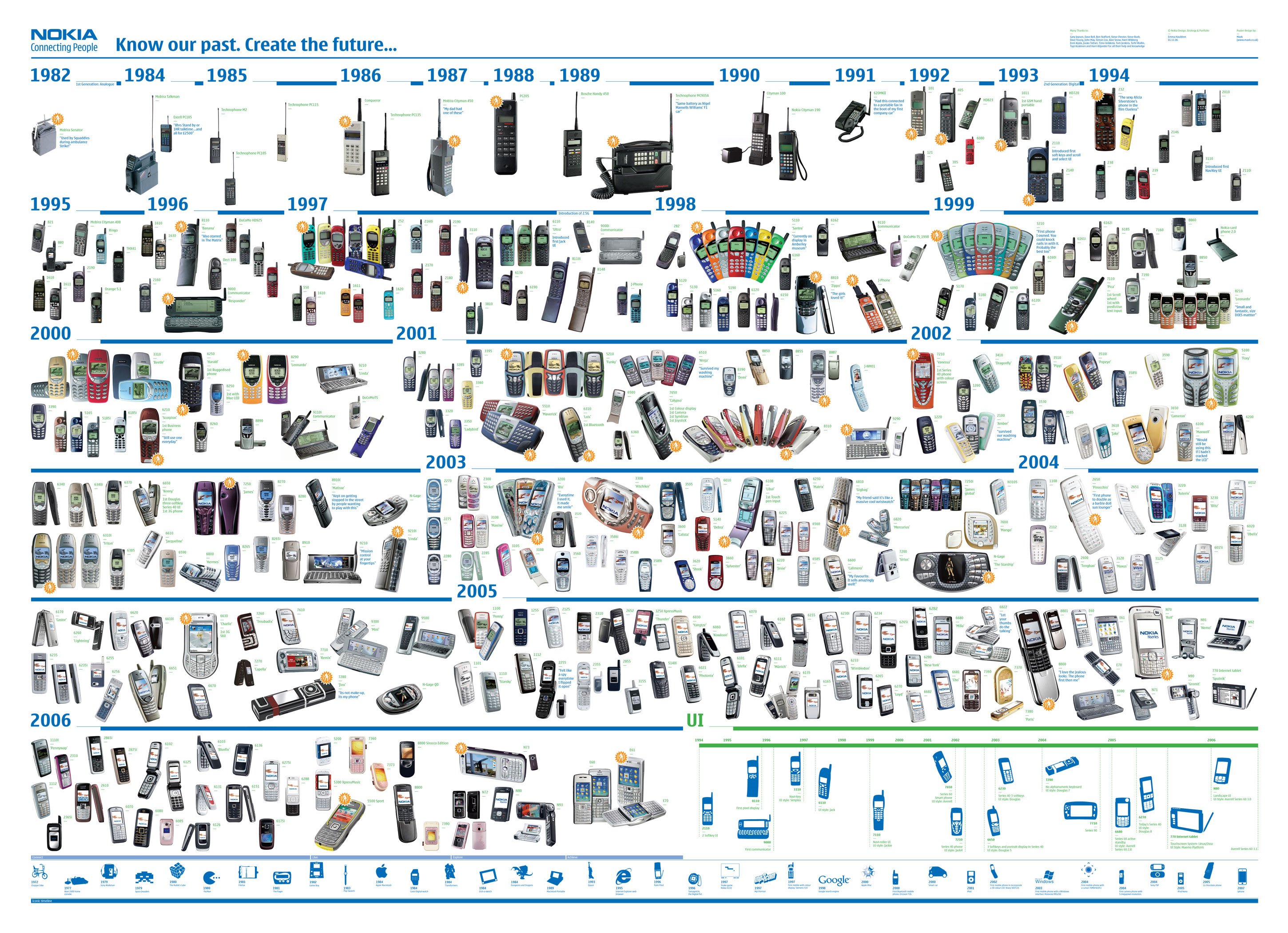
NokiaEvolution

“What technology wants” by Kevin Kelly is an intellectual exploration of the nature of technology (What is technology?), its fundamental character (Is technology good, bad or indifferent?) and humanity’s relationship to technology (How do we control technology’s evolution?).

My biggest insight from the book is an answer to the last question – How do we control technology’s evolution? The answer: we don’t, really (as we like to think), but we can steer technological development by using new technologies for the best possible use.

To answer “What is technology?”, Kevin Kelly defines the technium, the “organism” of technologies from past, present and future, “the technological assemblage we have surrounded ourselves with”. Much of the book tries to explain the what this technium wants. This concept is at times difficult to grasp. Unlike mice, monkeys or humans, the mixture of factories, iPads and screwdrivers does not have a “brain”. The technium is not conscious. So, where does the will – or where do the goals – of the technium come from? According to Kelly, the will of the technium is more like the tendencies and urges of technology. According to phsycial principles, technologies develop in some way. We can study the technium’s will by looking at the history of technological development and the evolution of life.

Kevin Kelly makes the argument that technology’s will is similar to human will. Increased efficiency, increased opportunity for development and increased complexity (the number of lines of code in Microsoft Windows has increased 10x between 1993-2006) are examples of both human and technological wills. An interesting observation: the wants of technology and humans are different from nature’s wants (I don’t observe nature wanting more efficiency or complexity).

Although we can not pick and choose technologies, there is a role for us to influence technology’s evolution. Kevin Kelly suggests that our task is “to encourage the development of each new invention toward this inherent good, to align it in the the same direction that all life is headed”. We need to “steer our creations toward those versions, those manifestations, that maximize that technology’s benefits”. Looking at our track record, this task of steering technology to its best version is not easy: the inventors of torpedo’s, radio, machine guns, color television and dynamite all believed there inventions would bring peace. They did not – and I did not find an answer in Kelly’s words how we can effectively steer our creations to be more benign.

Unknown's avatar

Samsara – repeating circle of birth, life, death and rebirth


Samsara is the single-most important movie to see before the end of winter.

A sequence of beautiful fragments of film, Samsara is awe-inspiring and mystical. The movie is fireworks for your eyes and ears.

Beyond its incredible aesthetics, the film shows how bizarre our world is. We have created harmful systems everywhere around us by optimizing system design for the wrong factors. Decades from now, our bodies, wealth and status will have disappeared. If we can give full attention to the world around us and channel our inventiveness and passion from creating killingry to livingry, we can create a world that is good for others. If we work hard and succeed, maybe we can make a movie called Nirvana not too long from now.

Nothing but respect to the artists who overcame fear and stayed committed for 5 years to ship this incredible movie.

Unknown's avatar

Data drives efficiency: will more computing power lead to lower energy consumption?

jet engine

Imagine standing next to one of the four massive engines of a Boeing 747. Cruising at 900km/h high above the earth, this 70m-long plane burns approximately 250 liters of kerosene per minute. That number can quickly be reduced by 1-5%. How? By using sensors on the jet’s blade to collect data, a wireless information transmission system, real-time analysis and optimization controls.

For industrial hardware companies, more information on equipment operations is an opportunity to reinvent their business. GE now has 250,000 “intelligent” machines — MR-scanners, gas turbines and jet engines — fitted with sensors, wireless technology, and controls. Some years ago, GE sold only hardware, dealing with a customer once per lifetime (if all went well, that is). Today, GE can build a continuous relationship with customers, informing them how to run their machines more efficiently, or even controlling the equipment for them.

This jump in productivity is enabled by two trends: more data and faster information processing.

First, we can cheaply gather great amounts of data. Sensors are becoming smaller and cheaper every year. In addition, the need to place additional hardware decreases – much information can be picked up from existing devices. You can measure space occupancy of a college dorm by the number of wifi signals; velocity by your smartphone’s gyroscope or air pollution using spectrometers.

Second, we can now process large amounts of data near real-time. This is enabled by the increasing computer power per dollar, aided by computational techniques like machine learning.

But these two trends don’t influence only airline companies. Nest’s smart thermostat uses motion sensors, machine learning and thermostat controls to make your house more comfortable and reduce your energy bill. These little magical devices can reduce your energy bill by up to 40%, using the trends above to their full potential.

Not long ago, the drivers for energy efficiency were material science, mechanical design and behavioral change. I believe another force is becoming a very important driver: data analysis. May energy  consumption drop because of it.

Unknown's avatar

Finite vs. Infinite games

Finite games follow a fixed set of rules that can not be altered during the play of the game. The purpose of a finite game is to win. Chess and football are two typical examples of finite games.

In stead, the purpose of an infinite game is to continue playing. Infinite games transcend time and invite anyone who is willing to play to join in. Infinite games I used to play were keeping a ball up in the air as long as possible, or building tree houses.

Too often we approach life as a finite game: we believe success to be of a scarce nature; you must follow a fixed set of rules to get there and there can only be a limited number of winners. The world becomes much richer when we approach life as an infinite game: the rules become ours to (re)invent, and the goal is to continue the game together.