Unknown's avatar

The Best Books I Read in 2024

Welcome to my annual book review. See prior versions here: 2023, 2022, 2021, 2020, 2019, 2016, 2015, and all time

Last year I wrote that I would run two experiments in 2024:

  1. To read more actively
  2. To consider alternatives to reading for learning

On the second experiment, I would rate myself a 6 out of 10. I still primarily default to books, podcasts, and ChatGPT. I don’t use YouTube that much. 

I would rate myself an 8 out of 10 on reading more actively.  I tried to pick up books that have some direct application to what I was doing. 

As an example, when I read Peter Attia’s book Outlive, I did a detailed blood marker test via Function Health. Based on those results, I started to take supplements and changed my exercise pattern. 

Or, as another example, when I read Richard Schwartz’s book, You Are the One You’ve Been Looking For about Internal Family Systems (IFS), I started working with an IFS therapist.

In addition to pairing reading with follow-up actions, I’ve been using ChatGPT to read more actively. While reading non-fiction books, I use it to ask questions to clarify what I’m reading.

I’ve also been using AI to distill and remember a book’s key concepts. For instance, I’ve used Gemini to create questions and answer pairs based on my Kindle highlights. Then, I pop those into Anki, the spaced repetition app.

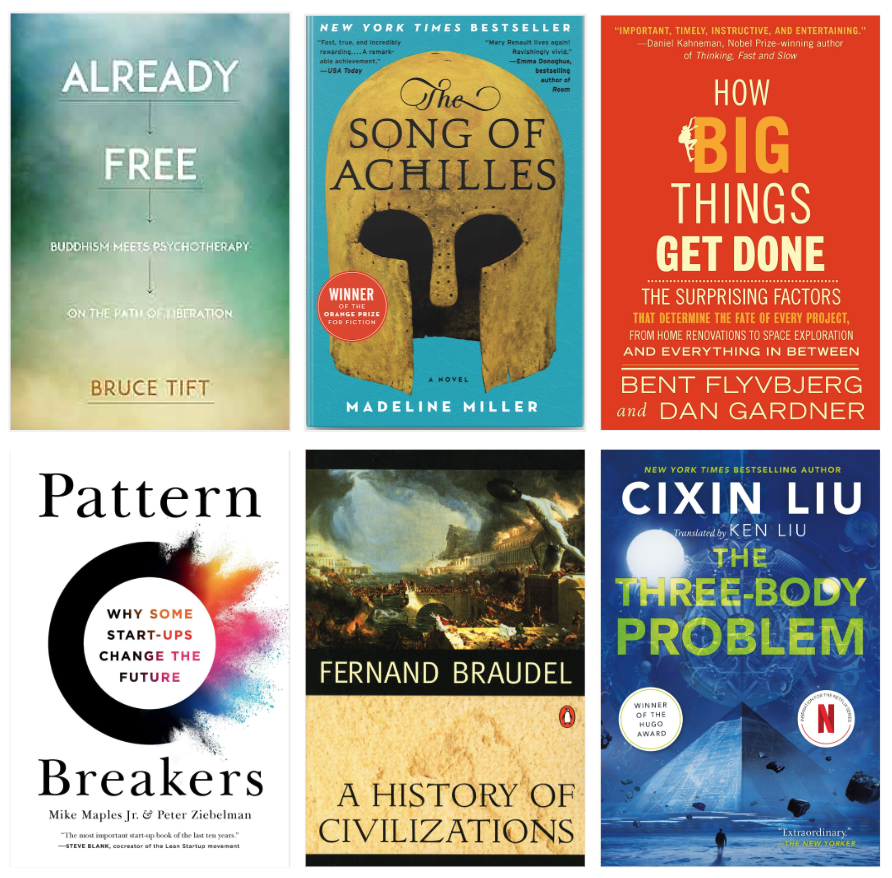
On to my top picks for 2024. I read 22 books this year. See my top 6 below. For the full list, check out my Goodreads.

Already Free by Bruce Tift

This book was recommended to me by my friend Aart. It’s written by a lifelong meditator and psychotherapist. In it, he tries to marry Eastern and Western views on psychology. The Western view, which he calls developmental, supposes that by working on yourself, you can improve. The Eastern view, which he calls fruitional, supposes that sensations will never go away and that the practice is to be able to sit with them. I would highly recommend this book.

One of the key concepts that I still refer to regularly is the spectrum of separating vs. connecting. Tift writes that most of us have a tendency to either be connecting, which can mean pleasing others, or separating, which can mean declining requests for attention. This is something I have been playing with this year. Since finishing the book I have done a few one-on-one consulting sessions with Bruce and I intend to continue those. 

Song of Achilles by Madeline Miller

This was the best-written novel I read this year. It’s set before and during the Trojan war, in which Achilles, Menelaus, and others fight against Troy. Izzy and I read this together and really enjoyed it. 

How Big Things Get Done by Brent Flyvbjerg

This is an amazing book about why so few large projects get completed on time and on budget (only 8 out of 100 projects, according to the author’s extensive database), recommended by my friend Alex. The book starts with the story of the Empire State Building, which went from construction start to completion in just 1 year and 45 days. The book is written by an Oxford professor who has spent his entire career delivering big projects.

A key concept to deliver projects on-time and on-budget execution is modularity. This is why solar panels are such an incredible technology. As I was reading this book, I got increasingly excited about building big projects. I would recommend this book to any engineer, architect, or builder. The book also reminds me of Patrick Collison’s web page about rapidly delivered projects: https://patrickcollison.com/fast

Pattern Breakers by Mike Maples, Jr. 

Maples is a Silicon Valley seed investor. While many books are written about how to start and grow a startup, few discuss what ideas are worth pursuing. That’s what this book is about.  

Maples introduces two main concepts:

  1. Inflections. These are secular trends that change the landscape. For example, if AI reaches human-level intelligence and is given ways to act on our behalf, we might all have virtual personal assistants. Or, if solar and batteries become 80% cheaper, it might mean that the cheapest way to produce fuel is by producing it from zero-carbon power.  
  2. Insights. These are non-obvious truths about how to harness one or more inflections to change human capacities or behaviors in a radical way. As an example, Wispr Flow, an AI dictation app, is powered by the insight that talking is more natural (and possibly faster) than typing. 

I took a lot of notes while reading this book. It offered a great lens to look at businesses I am involved in and that I admire. It also offers a great framework to look at future companies. 

History of Civilizations by Ferdinand Braudel

This is a history book written in the 1970s by a well-regarded French historian. He provides a sweeping history of human civilizations. I enjoy how Braudel draws broad trends while providing specific anecdotes. For example, the United States became a British colony, not a French one, despite the French being there first. Why? Britain sent many more people to America. When the British-French war broke out in 1760, there were 1 million British and only 60 thousand French. The book has some similarity to The Lessons of History by Will and Ariel Durant. 

Three Body Problem series by Cixin Liu

I had read the first book in this three-part series a few years ago and read numbers two and three this year. These books are page-turners. Liu introduces a wide range of concepts, ranging from light speed propulsion to reducing the number of dimensions as a method to attacking other species. And, of course, dark forest theory: if there is other intelligent life in the universe, it is safest for them to not show signs of existence and to annihilate any other intelligent life without investigating. 

I also loved the composition of the books. For example, I loved the stories Liu invents in book three, that hide secrets for humanity about the technology they ought to develop.

Unknown's avatar

The Best Books I Read In 2023

Welcome to my annual book review. See prior versions here: 2022, 2021, 2020, 2019, 2016, 2015, and all time

I recently listened to an interview with Kevin Kelly, who has published a half dozen books. He said he’s no longer writing new books, because he believes the center of our culture has shifted to YouTube. 

That thought struck a chord. From a young age, I have considered books sacred. I admire people who read a lot: Charlie Munger, Patrick Collison, Ryan Holiday.

For me, the purpose of reading books is to learn and to be exposed to new ideas. I find enjoyment in reading, yes, but that enjoyment stems from a belief that I am learning and growing, in line with one of my core values. For me, reading books is primarily a telic activity. 

This leads to two thoughts about reading books.

First, how you read books matters. If the purpose is learning, reading a book from start to finish is not terribly effective. You need to actively engage with the material to learn. That’s why I highlight while I’m reading, save highlights to Readwise, and use the Readwise app to present 10 daily highlights to me, selected from all the books I’ve read following the principle of spaced repitition. 

Second, books are not always the best medium for learning or exposure to new ideas. YouTube, Reddit, and ChatGPT may be better alternatives to solve a specific and immediate problem. Academic papers may be more suitable to learn about the leading edge of a field. Twitter, blogs, and newsletters have a higher “idea per word” ratio. 

This leads to a few experiments I want to run in 2024: 

  1. Read books more actively. Before starting a book, write down what I hope to learn and what I already know about the subject. Join a book club, and explore if group discussion leads to more insight and better retention. For each (good) book, digest all highlights a few weeks later. 
  2. Consider alternatives to books. Allocate more time to Reddit, ChatGPT, and YouTube. Read papers. Read Twitter. When engaging in alternatives to reading books, maximize learning, by taking notes and adding highlights to Readwise. 

I would be very curious to hear what you think of this. Please let me know!


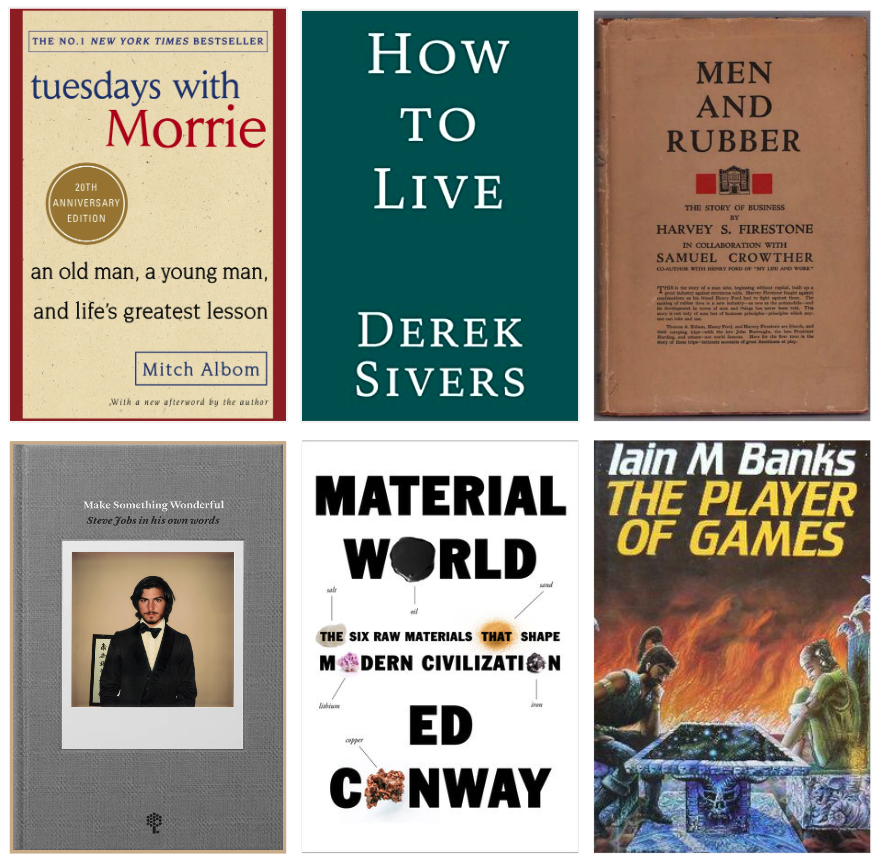
On to my favorite books of the year. I read 25 books this year. See my top 6 below. For the full list, check out my Goodreads

Tuesdays with Morrie

This book is about a professor, Morrie, who is told he has only a few more months to live. One of Morrie’s former students, the book’s author, visits him weekly for several months to write down his life lessons. The book is on my list because it reminded me how to live well. On this topic, I would also highly recommend David Brooks’ recent essay in the New York Times, The Essential Skills for Being Human. Thank you to Nicolien and Robert-Jan for the suggestion. 

How to Live

Some of my friends love listening to audio books. I don’t—I prefer reading. This book by Derek Sivers is an exception. He recorded the audio version of this book himself and it’s a wonderful performance. Like “Tuesdays with Morrie”, this book is about what it means to live a good life. But it is more provocative. In each of the 30 chapters, Sivers evangelizes a certain life philosophy. I found myself agreeing with many different and conflicting ones—forcing me to reflect on priorities and accepting that different moments in life may ask for different philosophies. Hat tip to Han! 

Men and Rubber

This book is an autobiography by the founder of Firestone tires, Harvey Firestone. Despite being written in the early 1900s, it’s still very readable. More importantly, as an entrepreneur, I could relate to a lot of the challenges that Firestone faced. The book recounts some fascinating history about the early automobile and tire industry, such as the deal that Firestone struck with Henry Ford to be the preferred tire supplier for the Model T. Thanks Sam for suggesting this gem. 

Make Something Wonderful

I don’t consider myself a Steve Jobs fanboy. What I loved about this book, though, is its composition. Unlike other biographies, this book is made up of speeches, interviews, and email exchanges. I found the email exchanges to be especially revealing. One such exchange shows how Jobs made a 180-degree turn after his mentor Andy Grove asked him to speak to an employee. The vividness of the email exchanges reminded me of another business biography I really liked: “The Founders”, by Jimmy Soni, about the early days of Paypal (one of last year’s top reads). 

Material World

In 2023, I read a few books about our material world. This was the most vivid. In it, British journalist Ed Conway weaves a fascinating journey through the materials needed for the energy transition—sand, salt, iron, oil, copper, and lithium. The book is chock-full of interesting anecdotes. It also leaves you with a clearer sense of the materials needed to transition to a low-carbon economy. It was similar to Vaclav Smil’s “How the World Works”, although Smil’s book has a broader scope (not just materials) and was a drier read. 

The Player of Games

This is a book from the Culture sci-fi series. The story is set in a multi-planetary society (the Culture) in which material wealth is abundant and humans don’t need to work to satisfy material needs. It implicitly poses the question to the reader: what, then, should you do with your time? 

The protagonist of the book, Jernau Gurgeh, answers this question by learning and playing games. But just as he gets bored with all the games he has already mastered, he is invited for a grand, highly complex game that will take him years to learn and puts him in contact with another society, the Azad, that doesn’t adhere to the principles of the culture. In doing so, he needs to fully embrace principles that oppose those of his own culture.

Unknown's avatar

6 lessons from Churchill’s biography

Churchill

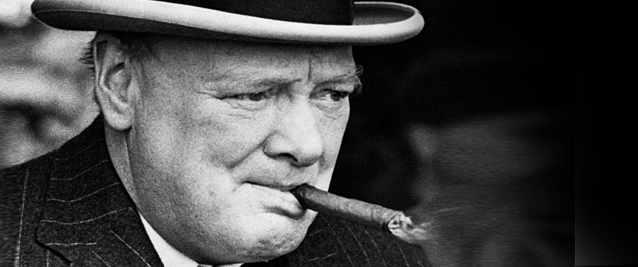
Churchill is widely admired for his courage and leadership. Would you not want to read about a man who is described by a biographer (Paul Johnson) as follows: 

Of all the towering figures of the twentieth century, both good and evil, Winston Churchill was the most valuable to humanity, and also the most likable. […] None hold more lessons, […] How to seize eagerly on all opportunities, physical, moral and intellectual. How to dare greatly, to reinforce success, and to put the inevitable failures behind you. And how, while pursuing vaulting ambition with energy and relish, to cultivate also friendship, generosity, compassion and decency.

Here are 6 lessons on life from Churchill’s biography:

Dedicate yourself fully to an activity. As a teenager Churchill discovered that he had a love for words. Attracted by the adventure of joining battles, Churchill decided to try to report on a war in India. Spending most of his twenties traveling all around the world reporting from the front lines, war-reporting became Churchill’s obsession (paraphrasing Drew Houston, Churchill found his tennis ball). Later Churchill would throw himself with comparable vigour into other activities.

Build different ways to express yourself. “Politics never occupied his whole attention and energies. He had an astonishing range of activities to provide him with relief, exercise, thrills, fun and money.”

Churchill was dismissed from his position as Admiral in the British navy by prime minister Asquith at the start of WW1. Churchill found himself suddenly with no daily responsibilities, which had a disastrous effect on his mental state (his wife thought “he would die of grief”). Inspired by a friend, Churchill picked up painting. Painting became a deep passion, since “while you are painting you can think of nothing else.” I think it is critical to develop activities that you enjoy outside your work – all the more so in a future where fewer people have jobs. In what ways do you express yourself? 

Go where the action is. “Churchill began his plan of campaign to make himself famous, or at least conspicuous. But if you sat still, expecting wars to come to you, you might be starved of action. You had to go to the wars. That became Churchill’s policy.”

Churchill built up a reputation by fighting in the front lines – he did not stay in the UK. After returning from his war journeys, he quickly built a network in London with people in the House of Commons, as his aspirations were to become a politician.  “All his life he refused to be bound to a desk. He insisted on seeing for himself.”

Rise after you fall. Churchill was fired from his official position more than three times and lost many personal battles (he lost all his money on multiple occasions). Yet he never let his head hang (for too long). After he was dismissed as Admiral of the Navy, he found a way to participate in a battle on land. He was humiliated badly in the House of Commons but fought his way back into politics.

Do not take yourself to seriously. “We are all worms. But I really think I am a glow worm.”

Share your work. “This was his first book, and he sent a copy to the Prince of Wales, who wrote him a delightful letter of thanks, praised it to the skies, and recommended it to all his friends.”

Unknown's avatar

Book review: Mountains beyond Mountains, a biography of Paul Farmer

How did your last visit to Belize or the Philippines influence you

At twenty-three years old, on a path to becoming a doctor, Paul Farmer spent several months as a volunteer in Haiti. Like other American visitors, Paul Farmer was amazed by the jam-packed third-hand European vans and struck by the warmness of the Haitians. Unlike other Westerners, Paul Farmer turned a one-off visit into a lifelong relationship. He decided to build a health clinic in Haiti, for the poorest people in the country.

Mountains beyond Mountains tells the story of Farmer’s life. I highly recommend the book as an inspiration for living a life of service. Farmer calls his life approach pragmatic solidarity: not the life of an ascetic who attempts to achieve nirvana by meditating in solitude; but the life of a person who is out in the world helping others every minute of the day.

What did I learn from Paul Farmer? 

A deep love for all people. He helped the poorest, the ugliest, the neediest. The people others try to avoid, Farmer treats like dearest friends.

Complete, selfless dedication to a cause. Farmer would be the last to go to bed and the first to wake up. He let go of all personal comfort to spend more time with patients.

“The problem is, if I don’t work this hard, someone will die who doesn’t have to. That sounds megalomaniacal. I wouldn’t have said that to you before I’d taken you to Haiti and you had seen that it was manifestly true.”

Courage and persistence. When Farmer’s organization, Partners in Health, did not have enough money to buy drugs for patients in Haiti, Farmer would bring the medicine from the Brigham Young hospital in Boston, where he was a practicing doctor.

“Paul and Jim would stop at the Brigham pharmacy before they left for Peru and fill their briefcases with drugs. they had sweet-talked various people into letting them walk away with the drugs. […] Better to ask for forgiveness than permission.”

Clear in communicating his views. Farmer convinced the World Health Organization to change their specified treatment for multi-drug resistant tuberculosis all around the world. That does not happen if you do not clearly speak your mind.

“He was fresh as hell to me, but I liked him, because if you said boo and he didn’t think boo was right, he’d tell you. He was way ahead of me, on service to the poor.”

Excellent at maintaining relationships. Farmer would thank everyone personally for making donations – even the individual $10 contributions from fellow church visitors in Boston.

As a reader, I observed a though coming to mind: “How can I lead a life as impactful as Farmer?”. I don’t think that question follows from the right intention. The goal is not to be just like Paul Farmer – we should all find our own paths in life.

What we can learn, however, is to focus our work on the needs of others – not the comfort it provides to ourself; to commit to the problems we believe should be solved; and to pursue our cause with vigor and persistence, not being attached to the outcomes of our actions. 

Unknown's avatar

What Technology Wants

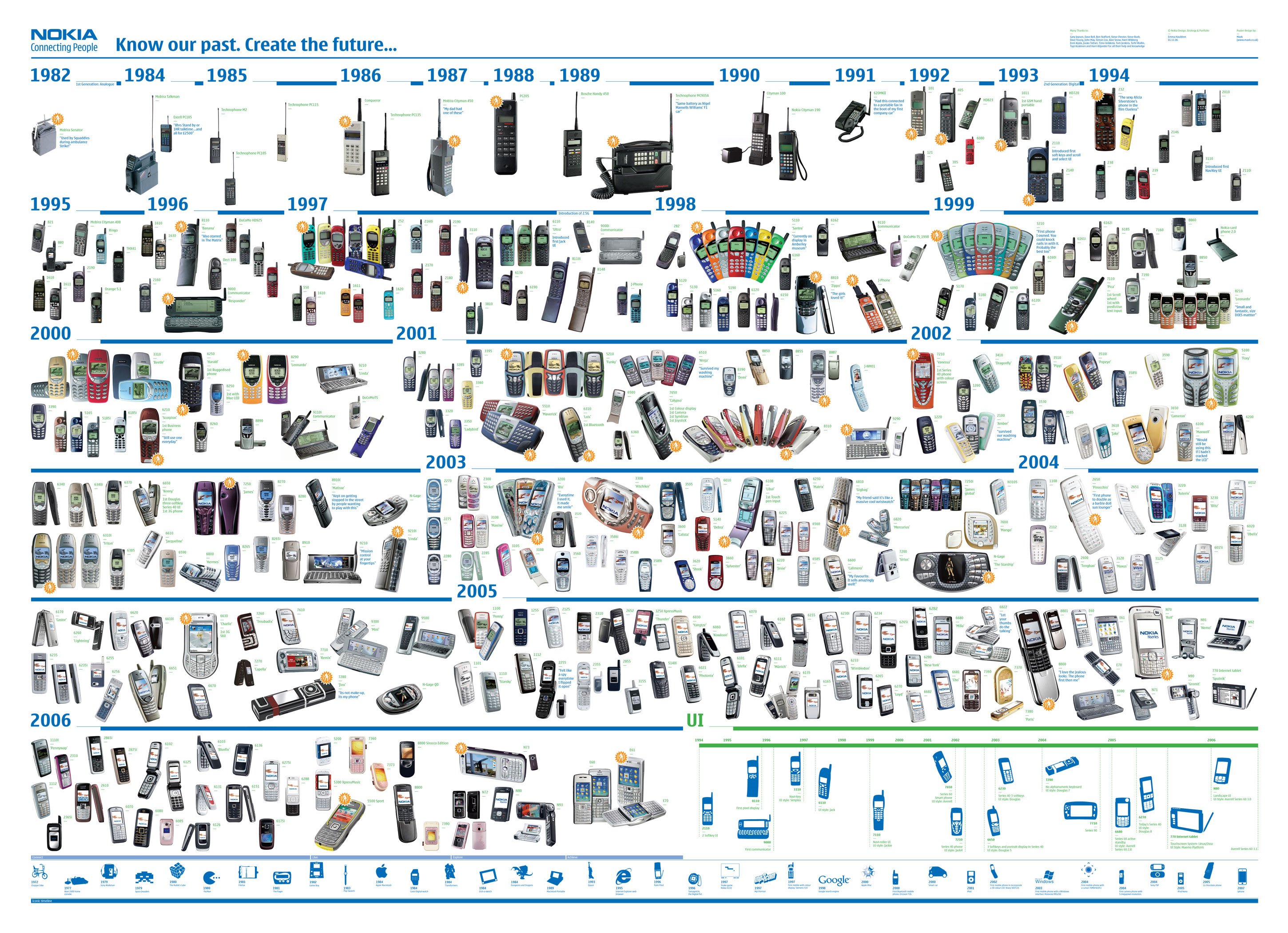
NokiaEvolution

“What technology wants” by Kevin Kelly is an intellectual exploration of the nature of technology (What is technology?), its fundamental character (Is technology good, bad or indifferent?) and humanity’s relationship to technology (How do we control technology’s evolution?).

My biggest insight from the book is an answer to the last question – How do we control technology’s evolution? The answer: we don’t, really (as we like to think), but we can steer technological development by using new technologies for the best possible use.

To answer “What is technology?”, Kevin Kelly defines the technium, the “organism” of technologies from past, present and future, “the technological assemblage we have surrounded ourselves with”. Much of the book tries to explain the what this technium wants. This concept is at times difficult to grasp. Unlike mice, monkeys or humans, the mixture of factories, iPads and screwdrivers does not have a “brain”. The technium is not conscious. So, where does the will – or where do the goals – of the technium come from? According to Kelly, the will of the technium is more like the tendencies and urges of technology. According to phsycial principles, technologies develop in some way. We can study the technium’s will by looking at the history of technological development and the evolution of life.

Kevin Kelly makes the argument that technology’s will is similar to human will. Increased efficiency, increased opportunity for development and increased complexity (the number of lines of code in Microsoft Windows has increased 10x between 1993-2006) are examples of both human and technological wills. An interesting observation: the wants of technology and humans are different from nature’s wants (I don’t observe nature wanting more efficiency or complexity).

Although we can not pick and choose technologies, there is a role for us to influence technology’s evolution. Kevin Kelly suggests that our task is “to encourage the development of each new invention toward this inherent good, to align it in the the same direction that all life is headed”. We need to “steer our creations toward those versions, those manifestations, that maximize that technology’s benefits”. Looking at our track record, this task of steering technology to its best version is not easy: the inventors of torpedo’s, radio, machine guns, color television and dynamite all believed there inventions would bring peace. They did not – and I did not find an answer in Kelly’s words how we can effectively steer our creations to be more benign.

Unknown's avatar

Book review: The Old Man and The Sea by Ernest Hemingway

This wonderful short novel is beautiful in its simplicity. It tells the story of an old fisherman from Cuba, who goes on a journey which truly tests his persistence. As I was reading the book on Costa Rica’s Pacific coast, the ocean setting made the writing very vivid.

Taking place only a few days, the adventure Hemingway sketches is fascinating. Hemingway has an interesting way of writing about an internal dialogue taking place in parallel with an external adventure. In his writings, Hemingway reminds me of authors like Herman Hesse and Paulo Coelho, who also write about the transformation of a character within external adventures.

Pick up this book and read the first half whenever you’re facing a period in which your persistence is truly tested. When you read about the battle the main character goes through, you will find regained energy to keep working on the challenges you are facing!

Fishing on the beaches of Ghana

Unknown's avatar

Book review: Little Bets by Peter Sims

Little Bets communicates one big idea: to create breakthrough solutions in today’s dynamic world, we need to learn by doing. Fully formed ideas based on assumptions are bound to change, as we learn a tremendous amount in the process of turning ideas into reality. We need to discover what works by making little, experimental bets. Action produces insights that can be analyzed.

Sims uses the life stories of successful business leaders, entrepreneurs and creative professionals to illustrate and further explore the central idea. He explains how Chris Rock creates hilarious stand-up comedy shows by tirelessly trying out jokes on a small audiences; and how Bill Hewlett & Dave Packard regularly produced small batches of prototype-products to discover whether customers liked their product.

The idea of experimentation does not only apply to product-ideas, but also to personal choices. I wrote in a previous post about my opinion that the best way to find work that you love is to try things. A recent article on BigThink, as well as Reid Hoffman’s book The Start-up of You, also stress the importance of this thought.

One of the realizations that came to me while reading the book, was that every creative process brings with it the fear and self-doubt of not succeeding. Also, Sims tells a great story about learning a little bit from every person you meet, particularly children, as well as learning a lot from people who are passionate about using your product. Although the “experimental approach” has been documented by other authors, Little Bets succeeds in triggering thoughts on how to be more experimental, as well as documenting some very revealing personal stories.