Unknown's avatar

6 lessons from Churchill’s biography

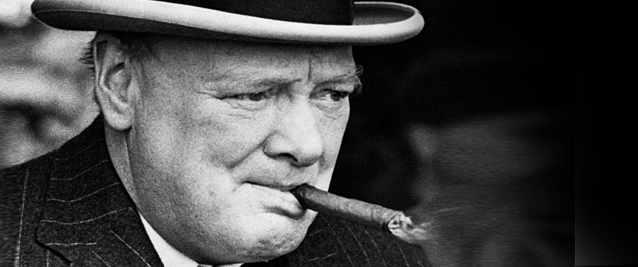
Churchill

Churchill is widely admired for his courage and leadership. Would you not want to read about a man who is described by a biographer (Paul Johnson) as follows: 

Of all the towering figures of the twentieth century, both good and evil, Winston Churchill was the most valuable to humanity, and also the most likable. […] None hold more lessons, […] How to seize eagerly on all opportunities, physical, moral and intellectual. How to dare greatly, to reinforce success, and to put the inevitable failures behind you. And how, while pursuing vaulting ambition with energy and relish, to cultivate also friendship, generosity, compassion and decency.

Here are 6 lessons on life from Churchill’s biography:

Dedicate yourself fully to an activity. As a teenager Churchill discovered that he had a love for words. Attracted by the adventure of joining battles, Churchill decided to try to report on a war in India. Spending most of his twenties traveling all around the world reporting from the front lines, war-reporting became Churchill’s obsession (paraphrasing Drew Houston, Churchill found his tennis ball). Later Churchill would throw himself with comparable vigour into other activities.

Build different ways to express yourself. “Politics never occupied his whole attention and energies. He had an astonishing range of activities to provide him with relief, exercise, thrills, fun and money.”

Churchill was dismissed from his position as Admiral in the British navy by prime minister Asquith at the start of WW1. Churchill found himself suddenly with no daily responsibilities, which had a disastrous effect on his mental state (his wife thought “he would die of grief”). Inspired by a friend, Churchill picked up painting. Painting became a deep passion, since “while you are painting you can think of nothing else.” I think it is critical to develop activities that you enjoy outside your work – all the more so in a future where fewer people have jobs. In what ways do you express yourself? 

Go where the action is. “Churchill began his plan of campaign to make himself famous, or at least conspicuous. But if you sat still, expecting wars to come to you, you might be starved of action. You had to go to the wars. That became Churchill’s policy.”

Churchill built up a reputation by fighting in the front lines – he did not stay in the UK. After returning from his war journeys, he quickly built a network in London with people in the House of Commons, as his aspirations were to become a politician.  “All his life he refused to be bound to a desk. He insisted on seeing for himself.”

Rise after you fall. Churchill was fired from his official position more than three times and lost many personal battles (he lost all his money on multiple occasions). Yet he never let his head hang (for too long). After he was dismissed as Admiral of the Navy, he found a way to participate in a battle on land. He was humiliated badly in the House of Commons but fought his way back into politics.

Do not take yourself to seriously. “We are all worms. But I really think I am a glow worm.”

Share your work. “This was his first book, and he sent a copy to the Prince of Wales, who wrote him a delightful letter of thanks, praised it to the skies, and recommended it to all his friends.”

Unknown's avatar

Book Review: Natural Capitalism

Natural Capitalism suggests practical methods to improve the performance of your company or the quality of life in your country by accounting for natural capital. If you want to read success stories of better cities, more profitable businesses and more productive factories that reduce flows of energy, materials and waste, this book is for you. Below are some of my most important take-aways:

“What might be called “industrial capitalism” does not fully conform to its own accounting principles. It liquidates its capital and calls it income. It neglects to assign any value to the largest stocks of capital it employs – the natural resources and living systems, as well as the social and cultural systems that are the basis of human capital.”

The book introduces four strategies that enable countries, companies, and communities to operate by behaving as if all forms of capital were valued.

  1. Radical resource productivity. Using resources more effectively has three significant benefits: it slows resource depletion, it lowers pollution, and it provides a basis to increase employment. Companies and designers are developing ways to make natural resources – energy, metals, water, and forests – work five, ten, even one hundred times harder than they do today.
  2. Biomimicry: redesigning industrial systems on biological lines that change the nature of industrial processes and materials, enabling the constant reuse of materials in continuous closed cycles. Spiders make silk, strong as Kevlar but much tougher, from digested crickets and flies, without needing boiling sulfuric acid and high-temperature extruders.
  3. Service and flow economy: a shift to an economy wherein consumers obtain services by leasing or renting goods rather than buying them outright. This will entail a shift from the acquisition of goods as a measure of affluence to an economy where the continuous receipt of quality, utility, and performance promotes well-being.
  4. Investing in natural capital: reinvestments in sustaining, restoring, and expanding stocks of natural capital.

Resource productivity in industry

According to Natural Capitalism, the methods to increase industry’s energy and material productivity can be classified into (1) design; (2) new technologies; (3) controls; (4) corporate culture; (5) new processes; and (6) saving materials. An example of improved productivity through controls is found in distillation columns:

“Distillation columns use 3 percent of total U.S. energy to separate chemical and oil products, but most operators instead of continuously monitoring the purity of product as it emerges, test only occasionally to make sure samples meet specification. Between tests the operators, flying blind, often feed the same material back through the column more times than necessary to be really sure the products will pass the test – using 30-50 percent excess energy. Better controls that measure the purity actually coming out and keep fine-tuning the process for the desired results could cut waste in about half.”

We only need to look at chickens for improved productivity through new processes:

“There are three ways to turn limestone into a structural material. You can cut in into blocks, grind it up and calcine it at about 1500 Celsius into Portland cement, or feed it to a chicken and get it back hours later as even stronger eggshell. If we were as smart as chickens, we might master this elegant near-ambient-temperature technology and expand its scale and speed.”

The next time you design a manufacturing process or building, limit yourself using this framework:

“If a company knew that nothing that came into its factory could be thrown away, and that everything it produced would eventually return, how would it design its components and products?”

Eggs

Elimination of Muda

Muda is Japanese for “waste”, “futility” or “purposelessness”.

A central thesis of the book is that large-scale centralized production is not more efficient than localized small-scale production. The benefits of decentralized production – lower capital investment, greater flexibility, higher reliability, lower inventory cost and lower shipping costs – often far outweigh the benefit of centralized production – a lower price per pound of material or cubic foot of machinery. In decentralized production, all the different processing steps can be carried out immediately adjacent to one  another with the product kept in continuous flow.

“From a whole-system perspective, the giant cola-canning machine may well cost more per delivered can than a small, slow, unsophisticated machine that produces the cans of cola locally and immediately on receiving an order from the retailer.”

“The whole system comprises classical central sewage-treatment plants and their farflung collection sewers – each piece optimized in isolation – is far costlier than such local or even on-site solutions as biological treatment. That is the case because even if the smaller plants cost more per unit of capacity (which they generally don’t), they’d need far less investment in pipes and pumps – often 90 percent of system investment – to collect sewage from a greater area to serve the larger plant.”

WasteWater

Water treatment centrally or in your garden?

Business models for a service economy

Together resource productivity and elimination of muda (lean thinking) offer the foundation for a powerful new business logic: Instead of selling the customer a product that you hope she’ll be able to use to derive the service she really wants, provide her that service directly at the rate and in the manner in which she desires it, deliver it as efficiently as possible, share as much of the resulting savings as you must to compete, and pocket the rest. 

An example of this “new business logic” are Energy Service Companies (ESCo’s). ESCo’s privately finance and install energy saving measures (insulation, energy-saving LED lighting, solar panels) in a client’s building, and charge a monthly fee to the client that is typically less than the energy saved. In a not-so-distant past, engineering firms would charge for the product (insulation materials, solar panels and labor costs for installation) upfront, because of which many potential clients did not become clients because they could not afford the capital expense.

SpaceX_Dragon

Another not-so-earthly example is Elon Musk’s SpaceX. In stead of selling NASA a rocket, SpaceX charges NASA for the service to bring weight into the stratosphere. Through a different design perspective – building reusable in stead of disposable rockets – SpaceX is able to deliver NASA their service for one-tenth of the cost, winning a $1.6B contract.

Other examples are Schindler, a Swiss elevator-manufacturer that makes 70 percent of its earnings by leasing vertical transportation services, and Amazon Web Services. In stead of selling server-racks, AWS provide the service of storing bits. With this new business logic, Amazon created the industry of cloud storage (for which no server-manufacturing-expertise was needed!).

“At first glance it is tempting to regard a company crazy for striving to sell less of its product. If you sell a service, however, you have the opportunity to develop relationships, not just conduct a one-time transaction. The business logic of offering continuous, customized, decreasing-cost solutions to an individual customer’s problems is compelling because the provider and the customer both make money in the same way – by increasing resource productivity. Service providers would have an incentive to keep their assets productive for as long as possible, rather than prematurely scrapping them in order to sell replacements.”

A “service economy” has important macroeconomic implications. In a “goods economy”, purchasing and thereby orders fluctuate vigorously depending on the economy. In a “solutions economy” this volatility is dampened, because access to a solution does not require large investments, only annual service-fees. This would lead to an enormous reduction in the cycle of jobs being created and destroyed.

The shared economy is one incarnation of the service economy. The shared economy – an economy in which people receive service from the unused capital of other individuals – has started to take shape in recent years because technology has enabled fast and efficient distribution of goods and connection between individuals. With smart door-locks and iPhones with internet access, you can reply to a tenant on airbnb, approve her stay and give her digital, 24-hour access to your front door all in a matter of minutes. Before, this was not possible.

Important questions:

  • Why is the idea of “centralized production leads to maximum efficiency” deeply rooted in our minds if it is incorrect?
  • Why has the “service economy” or “solutions economy” – the concept to sell access to a product in stead of the product itself – been adopted by companies only in the last 20 years?
  • Why do product companies – Apple, Philips, Dyson – choose to sell a product in stead of access to a service, if selling a service allows them to build long-term customer relationships?
Unknown's avatar

Book review: Benjamin Franklin’s autobiography

Image

Written 250 years ago, Benjamin Franklin’s autobiography is surprisingly easy to read. In today’s world, Franklin would be a mix between Tim O’Reilly and Tim Ferris. Franklin operated a printing company through which he influenced public opinion; he founded organizations as a fire brigade and a university and he actively tried to change the way he acted through smart exercises and habits. I found it valuable to read his autobiography because Franklin was on a relentless pursuit to become a better person. In his own words:

“I grew convinced that truth, sincerity and integrity in dealings between man and man were of the utmost importance to the felicity of life; and I formed written resolutions which still remain in my journal book to practice them ever while I lived.”

I wrote about one exercise to nurture your virtues in a post one year ago. Below are some of the thoughts flowing from his book.

# Study voraciously

Franklin took all the time he could to read. At sixteen Franklin became vegetarian, so he could eat a light lunch at his office, saving money and time to read more books.

# Changing someone else’s opinion

Socrates’ method of inquiry – as documented in Xenophobon’s book – is a tool to let other people rethink their beliefs or opinion on a subject by mastering the art of questioning. Franklin also taught himself to avoid argument. When he disagreed with someone, he would put his remark in the form of a question “Do you not think that the issue can be seen from another perspective?”. The point he makes is phrased by Alexander Pope as:

“Men should be taught as if you taught them not, and things unknown proposed as things forgot”

# Build relationships

Benjamin Franklin was recommended by two Governors for his work. “This was the second governor who had done me the honor to take notice of me; which, to a poor boy like me, was very pleasing.”

# An exercise to learn to write 

Franklin learned to write by sending in pieces to his brother’s printing press under the name of an invented elderly lady. Franklin describes one exercise he used to improve his writing: Take a piece of work that you think is well-written and copy the essence of every sentence. Put the notes to the side for a few days. Then, pick up the notes and try to recreate the original essay from the notes. Compare your paper to the original, and observe where and how the author of the original created different sentences.

# Stick to your principles

A friend who travelled alongside Franklin from NYC to Philadelphia was drunk and did not want to row when it was his turn to take the oars. Franklin insisted he would, because he saw every man on the team as equal. Here, Franklin was a man of principle – not bending to suit a friend who drank.

# Work with the best

When Franklin arrived in England, under the false conviction that the Governor had set up meetings for him with printers, he had to look for something else to do. He was advised to work with experienced printers in the UK; training with whom would allow him to set up his own shop afterwards.

# Learn to say no to requests

When he speaks about a governor who did not keep his promise. “It was a habit he had acquired. He wished to please everybody; and, having little to give, he gave expectations. He was otherwise an ingenious, sensible man […]”

# Think independently 

At the time Franklin started work in a printing press in England, the workmen at the printing press would drink beer during the working day, supposing they needed the beer for nutrition. Franklin reasoned that the nutritional value of 6 pints of beer could be no more than a loaf of bread, because:

“The strength afforded by beer could only be in proportion to the grain or flour of the barley dissolved in the water of which it was made.”

Franklin did not drink beer and was a better worker and wealthier man as a result.

# Be ethical in your work

Franklin refused to print advertisements or letters that spoke negatively of others.

“I carefully excluded all libeling and personal abuse.”

When his customers would claim “freedom of press”, Franklin would respond by saying that he would print the article for them, but that he would not distribute such a piece.

# Find smart ways to learn

When Franklin wanted to learn Italian, he found another student with whom he would play chess. The winner of a game was allowed to impose a language-learning task on the other.

Franklin also created a “club of mutual improvement” called the junto. The group would meet every week to discuss questions on morality, politics or science. 

# Turn enemies into friends

One man spoke against Benjamin Franklin. In stead of attacking him, or writing him a nasty letter, or even asking “Why did you attack me?”, Franklin tried a different tactic: he asked the man to use something he deeply cared about. Franklin asked to borrow a book, which the man highly treasured.

“He that has once done you a kindness will be more ready to do you another, than he whom you yourself have obliged.”

Try to think in opportunities when someone reproaches you – try to tickle their interests.

# Spread ideas through writing

Franklin used the written word as a method for spreading his ideas. He would come up with a solution to a social problem – for instance, an Academy to reduce the levels of illiteracy in Philadelphia – write a convincing essay, share it with friends to receive feedback, and publish it into local newspapers. This is no different from the method Elon Musk uses today to spread the idea of the Hyperloop.

Glancing over the different lessons learned, Franklin’s autobiography could easily fit into a business-book section.

Unknown's avatar

Book review: Mountains beyond Mountains, a biography of Paul Farmer

How did your last visit to Belize or the Philippines influence you

At twenty-three years old, on a path to becoming a doctor, Paul Farmer spent several months as a volunteer in Haiti. Like other American visitors, Paul Farmer was amazed by the jam-packed third-hand European vans and struck by the warmness of the Haitians. Unlike other Westerners, Paul Farmer turned a one-off visit into a lifelong relationship. He decided to build a health clinic in Haiti, for the poorest people in the country.

Mountains beyond Mountains tells the story of Farmer’s life. I highly recommend the book as an inspiration for living a life of service. Farmer calls his life approach pragmatic solidarity: not the life of an ascetic who attempts to achieve nirvana by meditating in solitude; but the life of a person who is out in the world helping others every minute of the day.

What did I learn from Paul Farmer? 

A deep love for all people. He helped the poorest, the ugliest, the neediest. The people others try to avoid, Farmer treats like dearest friends.

Complete, selfless dedication to a cause. Farmer would be the last to go to bed and the first to wake up. He let go of all personal comfort to spend more time with patients.

“The problem is, if I don’t work this hard, someone will die who doesn’t have to. That sounds megalomaniacal. I wouldn’t have said that to you before I’d taken you to Haiti and you had seen that it was manifestly true.”

Courage and persistence. When Farmer’s organization, Partners in Health, did not have enough money to buy drugs for patients in Haiti, Farmer would bring the medicine from the Brigham Young hospital in Boston, where he was a practicing doctor.

“Paul and Jim would stop at the Brigham pharmacy before they left for Peru and fill their briefcases with drugs. they had sweet-talked various people into letting them walk away with the drugs. […] Better to ask for forgiveness than permission.”

Clear in communicating his views. Farmer convinced the World Health Organization to change their specified treatment for multi-drug resistant tuberculosis all around the world. That does not happen if you do not clearly speak your mind.

“He was fresh as hell to me, but I liked him, because if you said boo and he didn’t think boo was right, he’d tell you. He was way ahead of me, on service to the poor.”

Excellent at maintaining relationships. Farmer would thank everyone personally for making donations – even the individual $10 contributions from fellow church visitors in Boston.

As a reader, I observed a though coming to mind: “How can I lead a life as impactful as Farmer?”. I don’t think that question follows from the right intention. The goal is not to be just like Paul Farmer – we should all find our own paths in life.

What we can learn, however, is to focus our work on the needs of others – not the comfort it provides to ourself; to commit to the problems we believe should be solved; and to pursue our cause with vigor and persistence, not being attached to the outcomes of our actions. 

Unknown's avatar

On the Good Life

If a man ascended into heaven and gazed upon the whole workings of the universe and the beauty stars, the marvelous sight would give him no joy if he had to keep it for himself

– old Roman saying.

I had the pleasure to spend the last weekends traveling Europe. In Zurich, Belgium and London, I found myself surrounded by beautiful friends who truly made me feel at home. What would life be without friends? Below some reflections taken from Cicero’s “On the Good Life”:

Friendship can only exist between two good men.

When a man thinks of a true friend, he is looking at himself in the mirror. Even when a friend is absent, he is present all the same. However poor he is, he is rich: however weak, he is strong. […] Even when he is dead, he is still alive. He is alive because his friends still cherish him, and remember him, and long for him. This means that there is happiness even in his death – he ennobles the existences of those who are left behind.

A good man is attracted by other good men; he wants to annex them for himself.

Scipio’s greatest wish was that all his friends should gain, not lose, in stature because of their association with himself.

You ought to give each of your friends just as much assistance as you have the capacity to provide.

Unknown's avatar

What to do?

Dear Michael,

Thank you very much for your recent letter concerning “thinkers and doers.”

The things to do are: the things that need doing: that you see need to be done, and that no one else seems to see need to be done-that no one else has told you to do or how to do it. This will bring out the real you that often gets buried inside a character that has acquired a superficial array of behaviors induced or imposed by others on the individual.

Try making experiments of anything you conceive and are intensely interested in. Don’t be disappointed if something doesn’t work. That is what you want to know-the truth about everything-and then the truth about combinations of things. Some combinations have such logic and integrity that they can work coherently despite non-working elements embraced by their system.

Whenever you come to a word with which you are not familiar, find it in the dictionary and write a sentence which uses that new word. Words are tools-and once you have learned how to use a tool you will never forget it. Just looking for the meaning of the word is not enough. If your vocabulary is comprehensive, you can comprehend both fine and large patterns of experience.

You have what is most important in life-initiative. Because of it you wrote to me. I am answering to the best of my capability. You will find the world responding to your earnest initiative.

Sincerely yours,

Buckminster Fuller

From Buckminster Fuller’s introduction to Critical Path

Unknown's avatar

What Technology Wants

NokiaEvolution

“What technology wants” by Kevin Kelly is an intellectual exploration of the nature of technology (What is technology?), its fundamental character (Is technology good, bad or indifferent?) and humanity’s relationship to technology (How do we control technology’s evolution?).

My biggest insight from the book is an answer to the last question – How do we control technology’s evolution? The answer: we don’t, really (as we like to think), but we can steer technological development by using new technologies for the best possible use.

To answer “What is technology?”, Kevin Kelly defines the technium, the “organism” of technologies from past, present and future, “the technological assemblage we have surrounded ourselves with”. Much of the book tries to explain the what this technium wants. This concept is at times difficult to grasp. Unlike mice, monkeys or humans, the mixture of factories, iPads and screwdrivers does not have a “brain”. The technium is not conscious. So, where does the will – or where do the goals – of the technium come from? According to Kelly, the will of the technium is more like the tendencies and urges of technology. According to phsycial principles, technologies develop in some way. We can study the technium’s will by looking at the history of technological development and the evolution of life.

Kevin Kelly makes the argument that technology’s will is similar to human will. Increased efficiency, increased opportunity for development and increased complexity (the number of lines of code in Microsoft Windows has increased 10x between 1993-2006) are examples of both human and technological wills. An interesting observation: the wants of technology and humans are different from nature’s wants (I don’t observe nature wanting more efficiency or complexity).

Although we can not pick and choose technologies, there is a role for us to influence technology’s evolution. Kevin Kelly suggests that our task is “to encourage the development of each new invention toward this inherent good, to align it in the the same direction that all life is headed”. We need to “steer our creations toward those versions, those manifestations, that maximize that technology’s benefits”. Looking at our track record, this task of steering technology to its best version is not easy: the inventors of torpedo’s, radio, machine guns, color television and dynamite all believed there inventions would bring peace. They did not – and I did not find an answer in Kelly’s words how we can effectively steer our creations to be more benign.

Unknown's avatar

Elementary School is more than 1,2,3 – The Importance of Character Development in Early Years

Can you remember an experience in your elementary or high school years that truly shaped your character?

For me, playing field hockey was a key opportunity to build my character. I was not the most skilled of athletes – far from it, in fact. As is relatively common in the Netherlands, I played field hockey. Starting at age 9, the first years of hockey offered little competition. As I grew older, kids were started to be separated into different teams. From that moment onwards, there was a (very) strong incentive to perform. I remember that often when I started the training, I committed to put in twice as much effort as the other players, just to compensate for my skill.

It was a perfect opportunity to build my character at an early age. Most of us can think of several experiences in early adulthood that taught us certain values, but very few have had the opportunity to have such experiences at an earlier age – right when they are fundamentally important.

I strongly believe that elementary schools and high schools should go beyond teaching cognitive skills – reading, writing, mathematics – and start building character. Why? Because research shows that what distinguishes “successful” students later in life is not a difference in cognitive skill at an early age, but a difference in character.

Besides sports, starting and running Projects is a perfect opportunity for learning. That is why I think every child aged 11-12 (the final two years of high-school in most European countries) should have a compulsory project as part of his or her education. The success of such project education heavily depends on the skill of the teacher and the support of parents, other kids and partners. Inherently, project education seems unscalable, because it depends on the quality of people.

My question to you: How can a “project education” module be designed for scalability?

KIPP School in the Bronx

Knowledge is Power Program

Unknown's avatar

Book review: The Old Man and The Sea by Ernest Hemingway

This wonderful short novel is beautiful in its simplicity. It tells the story of an old fisherman from Cuba, who goes on a journey which truly tests his persistence. As I was reading the book on Costa Rica’s Pacific coast, the ocean setting made the writing very vivid.

Taking place only a few days, the adventure Hemingway sketches is fascinating. Hemingway has an interesting way of writing about an internal dialogue taking place in parallel with an external adventure. In his writings, Hemingway reminds me of authors like Herman Hesse and Paulo Coelho, who also write about the transformation of a character within external adventures.

Pick up this book and read the first half whenever you’re facing a period in which your persistence is truly tested. When you read about the battle the main character goes through, you will find regained energy to keep working on the challenges you are facing!

Fishing on the beaches of Ghana

Unknown's avatar

Book review: Little Bets by Peter Sims

Little Bets communicates one big idea: to create breakthrough solutions in today’s dynamic world, we need to learn by doing. Fully formed ideas based on assumptions are bound to change, as we learn a tremendous amount in the process of turning ideas into reality. We need to discover what works by making little, experimental bets. Action produces insights that can be analyzed.

Sims uses the life stories of successful business leaders, entrepreneurs and creative professionals to illustrate and further explore the central idea. He explains how Chris Rock creates hilarious stand-up comedy shows by tirelessly trying out jokes on a small audiences; and how Bill Hewlett & Dave Packard regularly produced small batches of prototype-products to discover whether customers liked their product.

The idea of experimentation does not only apply to product-ideas, but also to personal choices. I wrote in a previous post about my opinion that the best way to find work that you love is to try things. A recent article on BigThink, as well as Reid Hoffman’s book The Start-up of You, also stress the importance of this thought.

One of the realizations that came to me while reading the book, was that every creative process brings with it the fear and self-doubt of not succeeding. Also, Sims tells a great story about learning a little bit from every person you meet, particularly children, as well as learning a lot from people who are passionate about using your product. Although the “experimental approach” has been documented by other authors, Little Bets succeeds in triggering thoughts on how to be more experimental, as well as documenting some very revealing personal stories.