Unknown's avatar

Book review: Benjamin Franklin’s autobiography

Image

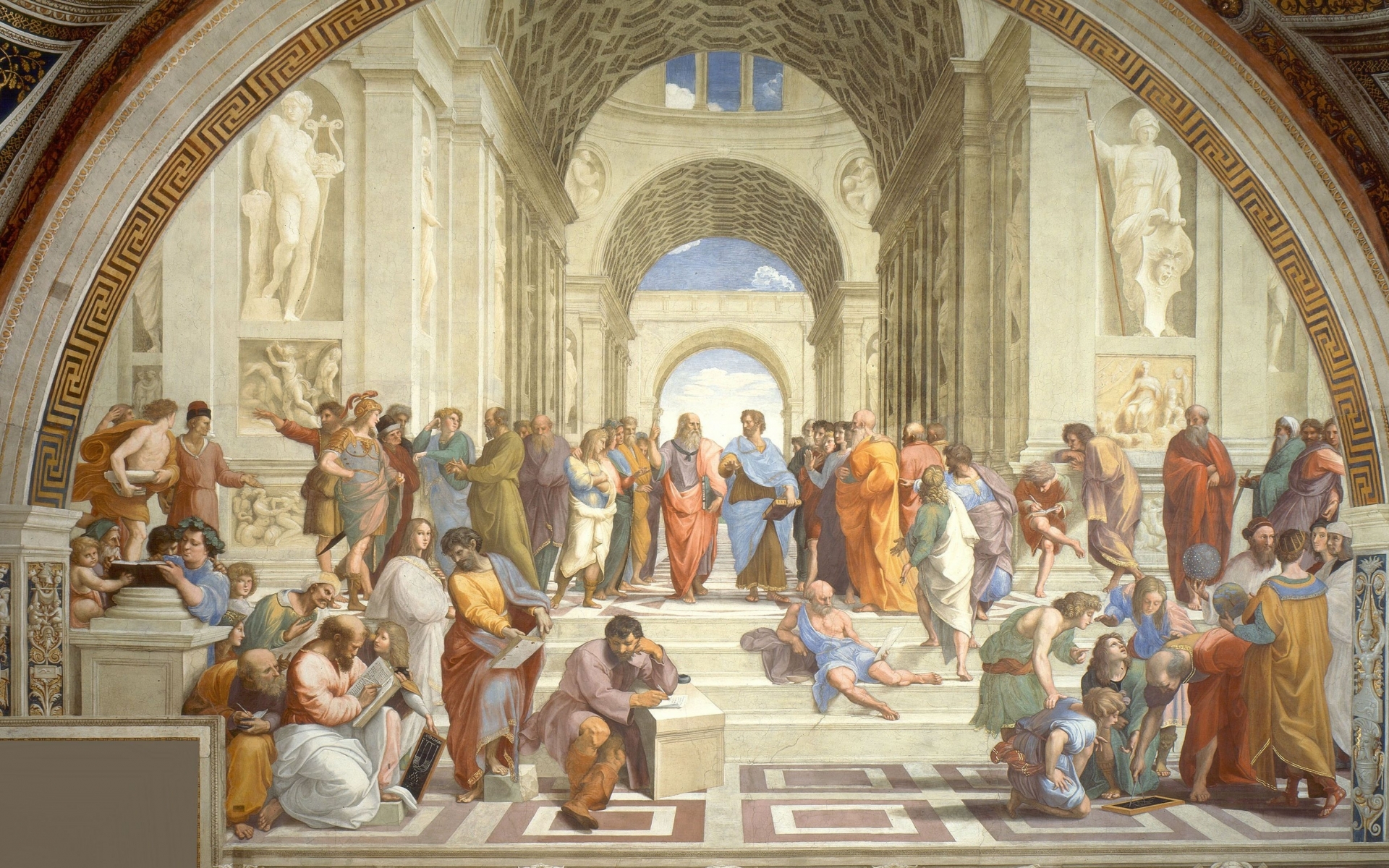
Written 250 years ago, Benjamin Franklin’s autobiography is surprisingly easy to read. In today’s world, Franklin would be a mix between Tim O’Reilly and Tim Ferris. Franklin operated a printing company through which he influenced public opinion; he founded organizations as a fire brigade and a university and he actively tried to change the way he acted through smart exercises and habits. I found it valuable to read his autobiography because Franklin was on a relentless pursuit to become a better person. In his own words:

“I grew convinced that truth, sincerity and integrity in dealings between man and man were of the utmost importance to the felicity of life; and I formed written resolutions which still remain in my journal book to practice them ever while I lived.”

I wrote about one exercise to nurture your virtues in a post one year ago. Below are some of the thoughts flowing from his book.

# Study voraciously

Franklin took all the time he could to read. At sixteen Franklin became vegetarian, so he could eat a light lunch at his office, saving money and time to read more books.

# Changing someone else’s opinion

Socrates’ method of inquiry – as documented in Xenophobon’s book – is a tool to let other people rethink their beliefs or opinion on a subject by mastering the art of questioning. Franklin also taught himself to avoid argument. When he disagreed with someone, he would put his remark in the form of a question “Do you not think that the issue can be seen from another perspective?”. The point he makes is phrased by Alexander Pope as:

“Men should be taught as if you taught them not, and things unknown proposed as things forgot”

# Build relationships

Benjamin Franklin was recommended by two Governors for his work. “This was the second governor who had done me the honor to take notice of me; which, to a poor boy like me, was very pleasing.”

# An exercise to learn to write 

Franklin learned to write by sending in pieces to his brother’s printing press under the name of an invented elderly lady. Franklin describes one exercise he used to improve his writing: Take a piece of work that you think is well-written and copy the essence of every sentence. Put the notes to the side for a few days. Then, pick up the notes and try to recreate the original essay from the notes. Compare your paper to the original, and observe where and how the author of the original created different sentences.

# Stick to your principles

A friend who travelled alongside Franklin from NYC to Philadelphia was drunk and did not want to row when it was his turn to take the oars. Franklin insisted he would, because he saw every man on the team as equal. Here, Franklin was a man of principle – not bending to suit a friend who drank.

# Work with the best

When Franklin arrived in England, under the false conviction that the Governor had set up meetings for him with printers, he had to look for something else to do. He was advised to work with experienced printers in the UK; training with whom would allow him to set up his own shop afterwards.

# Learn to say no to requests

When he speaks about a governor who did not keep his promise. “It was a habit he had acquired. He wished to please everybody; and, having little to give, he gave expectations. He was otherwise an ingenious, sensible man […]”

# Think independently 

At the time Franklin started work in a printing press in England, the workmen at the printing press would drink beer during the working day, supposing they needed the beer for nutrition. Franklin reasoned that the nutritional value of 6 pints of beer could be no more than a loaf of bread, because:

“The strength afforded by beer could only be in proportion to the grain or flour of the barley dissolved in the water of which it was made.”

Franklin did not drink beer and was a better worker and wealthier man as a result.

# Be ethical in your work

Franklin refused to print advertisements or letters that spoke negatively of others.

“I carefully excluded all libeling and personal abuse.”

When his customers would claim “freedom of press”, Franklin would respond by saying that he would print the article for them, but that he would not distribute such a piece.

# Find smart ways to learn

When Franklin wanted to learn Italian, he found another student with whom he would play chess. The winner of a game was allowed to impose a language-learning task on the other.

Franklin also created a “club of mutual improvement” called the junto. The group would meet every week to discuss questions on morality, politics or science. 

# Turn enemies into friends

One man spoke against Benjamin Franklin. In stead of attacking him, or writing him a nasty letter, or even asking “Why did you attack me?”, Franklin tried a different tactic: he asked the man to use something he deeply cared about. Franklin asked to borrow a book, which the man highly treasured.

“He that has once done you a kindness will be more ready to do you another, than he whom you yourself have obliged.”

Try to think in opportunities when someone reproaches you – try to tickle their interests.

# Spread ideas through writing

Franklin used the written word as a method for spreading his ideas. He would come up with a solution to a social problem – for instance, an Academy to reduce the levels of illiteracy in Philadelphia – write a convincing essay, share it with friends to receive feedback, and publish it into local newspapers. This is no different from the method Elon Musk uses today to spread the idea of the Hyperloop.

Glancing over the different lessons learned, Franklin’s autobiography could easily fit into a business-book section.

Unknown's avatar

The end of Spokes: Q&A and reflections

Colorado

QUESTIONS AND ANSWERS

What did you most enjoy?

I loved the daily rhythm of physical activity. I loved jumping into lakes and mountain creeks to swim. I loved meeting local people and hearing their stories. I loved listening to Long Now podcasts. I loved to sit in a forest and enjoy nature. I loved camping or sleeping straight under the stars. I loved building things with kids. I loved the taste of chocolate milk after a long day on the bike.

What was your favorite state?

Lake Silver in the Sierra Nevada was beautiful and so were the Rocky Mountains. The most beautiful state as a whole was Utah: deeply colorful formations of red rock, pine forests and mountain creeks.

What was the hardest part? 

It was never difficult for me to get into a good mood. I quickly learned that good old 80s music would make me happy, even in pouring rain with pain in my bottom.

I found it surprisingly hard to wait for other people in the morning to get ready. I would get agitated when people were taking things slowly. I realized that this caused no good to anyone, so I decided that when I was done I would pick up a book and read. That worked – most of the time.

OBSERVATIONS 

# People have an intrinsic desire to help.

We have received kindness from strangers countless times along our ride. Most strangers did not benefit from helping us, yet they cooked us dinner or offered us a place to stay. Philosophers who claim that humans are intrinsically evil haven’t cycled across America in the 21st century.

# Human interaction is an important ingredient to happiness.

It’s easy to build a negative train of thought on your bike. I have found talking to someone – a lady in the gas station or a team member – the surest way to turn from upset to happy. Some of the best moments on my bike were spent riding side-by-side.

# The US is beautiful.

We crossed pine forests, mountain lakes, stretches of desert – all were gorgeous. Natural environments “re-appear” around the globe: the Katy-trail reminded me of Costa Rica; the Rocky Mountains reminded me of the Alps.

# United States’ cities are not designed for cyclists.

I find suburbs and strip malls the ugliest parts of the country. Riding into Nashville was really ugly – tens of miles of gas stations, fast-food chains and car repair shops. My hypothesis is that (1) cities are widespread because the car existed before many cities started to grow and (2) there was little or no spatial planning because there was abundant land.

# Intimate experiences are a fast way to learn about people’s character.

I only knew Turner when I started the trip. Camping, cooking, buying groceries, cycling and making friends with gas-station clerks is a quick way to get to know your team. I learned within days that Jeff will always do what he says; that Claire makes friends with strangers easily and that Ethan works best when he can deeply focus on one task.

# … but you need personal time to keep peace in the team.

There are days when the tensions in the team get very high: people want different things; the tents are wet and everyone’s tired. Time by yourself is the best way to take a fresh perspective on tensions and to become happier.

# Most people strive for relatively simple things in life:

a loving family; a nice home; good food to eat; education for their children and time to hang out with friends. The idea that every person is on a quest to become enlightened is false (if you are on this quest, pick your friends wisely).

# It does not seem that internet has deeply changed life in rural areas.

I had expected young people in rural Kentucky to have the same role models as young people in NYC. This does not seem true. The few young people I met in rural Kansas or Kentucky had dreams of working in local grocery stores and farms in stead of starting an organization.

# Be careful for sprinklers when you set up camp on a grass field.

# Swimming and napping are always a good investment of time. 

Unknown's avatar

Nature’s independence

I wrote this blog mid-June, one week after leaving San Francisco. 

Image

Riding through the foothills of the Sierra Nevada we were surrounded by pristine pine forest. The environment reminded me of journeys to Sweden, Istanbul’s Star Islands and the Croatian coast.

As I stood in the middle of a quiet road in the forest, two deer walked onto the road. Meters away from me, both deer stopped and stood still for what felt like a full minute. As I set a step in their direction, the deer gently moved off the road and graciously hopped into the forest. It was a magical experience.

Our road has been marked by beautiful scenery. Unfortunately, we are not allowed to enter much of it: the vast majority of forest along the road is marked by “No Trespassing” signs indicating that “visitors are not welcome”.

Image

The craving for possession of land is foreign to me. In Sweden, any person can cross another man’s land as long as the visitor treats the land with respect. This “freedom to roam” is a constitutional right. After all, we are all visitors on earth – the land belongs to no one.

Bliss or pleasure is derived not from possession but from service: walks through the woods and squirrels playing in your backyard versus a document that states your ownership. As Emerson writes:

“Miller owns this field, Locke that, and Manning the woodland beyond. But non of them owns the landscape. There is a property in the horizon which  no man has but he whose eye can integrate all the parts, that is, the poet. This is the best part of these men’s farms, yet to this their warranty-deeds give no title.”

Unknown's avatar

The universe conspires in your favour

Image

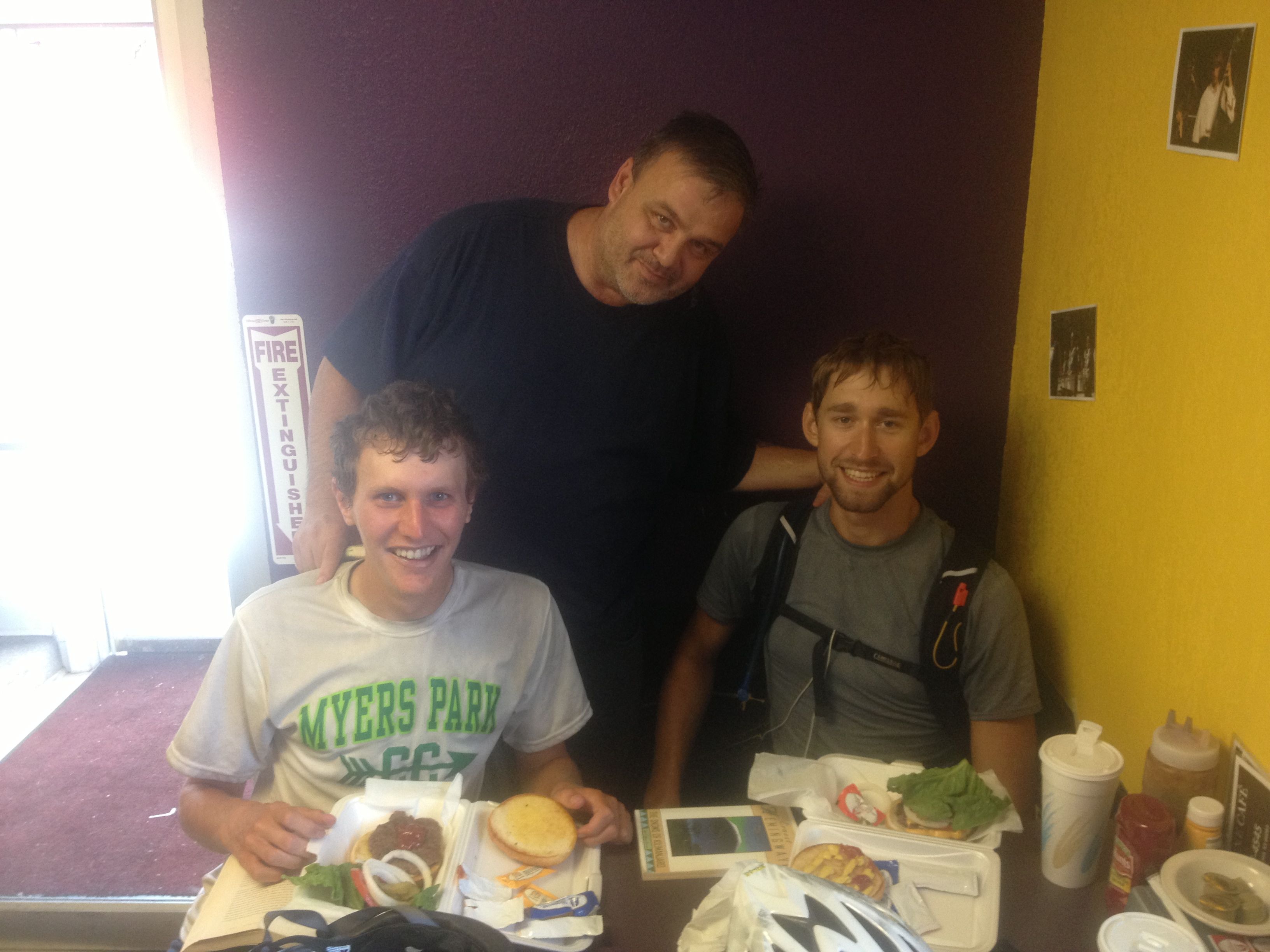
Forty miles south of Kansas city, on a sunny afternoon, half our Spokes team stops to refill our flasks with cold water at a small roadside restaurant. After she walks in, Claire explains to the man behind the counter that we are crossing the country to help teenagers start hands-on projects, because we believe that every child deserves to feel empowered to realize their ideas. Within minutes, free nacho’s and hamburgers are on the table (this is America…) and we are offered a place to stay for coming nights.

At such moments, I feel like a monk receiving a three-star Michelin-dinner after asking for alms.

Surprisingly, such generous offers have occurred regularly during our journey. No week passes by without a stranger reaching out to help us. How can this be explained? Is this mere coincidence?

I believe the support flows from a deep commitment to the cause we are fighting for. We put our heart into this project. People see us, recognize our commitment and a desire arises with them to contribute – to be part of our story. This speaks to the natural desire of people to do good. Better yet, I experience now the incredible power that you can unleash when you fight for something you care about. 

I am not the first to observe this. Emerson writes in the first pages of his essay on self-reliance:

“Every heart vibrates to that iron string”

Paulo Coelho puts this into words in the Alchemist:

“When you want something, all the universe conspires in helping you to achieve it.”

And Seth Godin has created an entire body of work around helping people to overcome fear and do what they care about. As said in the Icarus Deception -“Fly closer to the sun.”

I commit to putting my soul into my work.

Unknown's avatar

Book review: Mountains beyond Mountains, a biography of Paul Farmer

How did your last visit to Belize or the Philippines influence you

At twenty-three years old, on a path to becoming a doctor, Paul Farmer spent several months as a volunteer in Haiti. Like other American visitors, Paul Farmer was amazed by the jam-packed third-hand European vans and struck by the warmness of the Haitians. Unlike other Westerners, Paul Farmer turned a one-off visit into a lifelong relationship. He decided to build a health clinic in Haiti, for the poorest people in the country.

Mountains beyond Mountains tells the story of Farmer’s life. I highly recommend the book as an inspiration for living a life of service. Farmer calls his life approach pragmatic solidarity: not the life of an ascetic who attempts to achieve nirvana by meditating in solitude; but the life of a person who is out in the world helping others every minute of the day.

What did I learn from Paul Farmer? 

A deep love for all people. He helped the poorest, the ugliest, the neediest. The people others try to avoid, Farmer treats like dearest friends.

Complete, selfless dedication to a cause. Farmer would be the last to go to bed and the first to wake up. He let go of all personal comfort to spend more time with patients.

“The problem is, if I don’t work this hard, someone will die who doesn’t have to. That sounds megalomaniacal. I wouldn’t have said that to you before I’d taken you to Haiti and you had seen that it was manifestly true.”

Courage and persistence. When Farmer’s organization, Partners in Health, did not have enough money to buy drugs for patients in Haiti, Farmer would bring the medicine from the Brigham Young hospital in Boston, where he was a practicing doctor.

“Paul and Jim would stop at the Brigham pharmacy before they left for Peru and fill their briefcases with drugs. they had sweet-talked various people into letting them walk away with the drugs. […] Better to ask for forgiveness than permission.”

Clear in communicating his views. Farmer convinced the World Health Organization to change their specified treatment for multi-drug resistant tuberculosis all around the world. That does not happen if you do not clearly speak your mind.

“He was fresh as hell to me, but I liked him, because if you said boo and he didn’t think boo was right, he’d tell you. He was way ahead of me, on service to the poor.”

Excellent at maintaining relationships. Farmer would thank everyone personally for making donations – even the individual $10 contributions from fellow church visitors in Boston.

As a reader, I observed a though coming to mind: “How can I lead a life as impactful as Farmer?”. I don’t think that question follows from the right intention. The goal is not to be just like Paul Farmer – we should all find our own paths in life.

What we can learn, however, is to focus our work on the needs of others – not the comfort it provides to ourself; to commit to the problems we believe should be solved; and to pursue our cause with vigor and persistence, not being attached to the outcomes of our actions. 

Unknown's avatar

Which world do you live in?

Image

There are always a few who are not content to spend their lives indoors. Simply knowing there is something unknown beyond their reach makes them acutely restless. They have to see what lies outside – if only, as Mallory said of Everest, “because it’s there”.

This is true of adventurers of every kind, but especially of those who seek to explore not mountains or jungles but consciousness itself: whose real drive, we might say, is not so much to know the unknown as to know the knower. 

The earliest books we know today that contain the experiences of these explorers of consciousness are the Upanishads, the Dhammapada and the Bhagavad Gita. Eknath Easwaran has delivered a terrific job in translating all three books for Western readers, not only translating, but also adding brief introductions to every chapter of the books. 

The Upanishads are […] so varied that we feel some unknown collectors must have tossed into a jumble all the photos, postcards and letters from this world that they could find, without any regard for source or circumstance. […] they form a kind of ecstatic slideshow – snapshots of towering peaks of consciousness taken at various times by different observers.


The Dhammapada is a collection [of] sayings of the Buddha. If the Upanishads are like slides, the Dhammapada seems more like a field guide. [The author] urges us that it is our destiny as human beings to make this journey [of consciousness] ourselves. Everything else is secondary.


The Bhagavad Gita gives us a map and guidebook. It gives a systematic overview of the territory, shows various approaches to the summit with their benefits and pitfalls, offers recommendations, tells us what to pack and what to leave behind. It asks and answers the questions that you or I might ask – questions not about philosophy or mysticism, but about how to life effectively in a world of challenge and change.

The Upanishads, Dhammapada and Bhagavad Gita insist that the wider world of consciousness is our native land. We are meant to explore, to seek, to push the limits of our potential as human beings. The world of the senses is just a base camp: we are meant to be as much at home in consciousness as in the world of physical reality.


Do you take time to explore the world of consciousness?

Unknown's avatar

Podcast review: 5 talks that will inspire you

Image

Listening to interviews and talks is a great way to trigger a process of reflections and ideas. Below are 5 podcasts that I have recently listened to and I recommend. 

1. Thupten Jinpa (Dalai Lama’s translator) on working with the Dalai Lama. On Being Podcast.

“What are opposing characteristics in normal human beings, you tend to see them converging in him [the Dalai Lama].”

People who are pious and self-disciplined are often intolerant to people who do not live up to their standards. Thupten Jinpa explains that the Dalai Lama gets up at 3.30am every day, but does not judge others. Similarly, he says that the Dalai Lama is very humble but tremendously self-confident. An example for each of us to be. 

2. Seth Godin on the Art of noticing. On Being Podcast. 

I receive a daily email from Seth’s blog. Regularly – at least once per week – his writing triggers a reflection or new idea in my head. In this interview with Krista Tippett, Seth emphasizes the idea that there is no “mass market” and that every product, service or story in fact must be tailored to a tribe or an individual. He suggests that the best way to become an expert is to pick a craft, build things, share them with 10 friends and observe which products are shared by friends with others. 

3. Yvon Chouinard (founder of Patagonia) on being an example (and surfing). Stanford Center for Social Innovation. 

Great talk – Yvon has his own way of thinking and is a very humorous speaker. “How many really beautiful people do you know are squandering away?”. During the question and answer session, after the interview, someone in the audience asks how Yvon will target the Walmart customer that can not afford Patagonia-prodcuts. Yvon answers that he can not offer his products at Walmart-price – because his quality is too expensive. What’s interesting is that Yvon believes that he can change the way mass market companies will change they way they do business if a small company like Patagonia shows what’s possible in terms of manufacturing for a small company. 

4. Tim O’Reilly (O’Reilly media) speaking to a class of Stanford undergraduates on creating more value than you capture. Stanford Entrepreneurship Corner. 

In this talk, Tim speaks about different trends in technology start-ups. He also explains what he does as an editor, author and investor: “The skill of writing is to create a context in which other people can think.”

If you like this talk, listen also to Tim O’Reilly’s talk at the Long Now Foundation. 

5. Michael Pollan speaks about three ways to change our food system at the Long Now Foundation. Seminars About Long Term Thinking (SALT).

First, Michael Pollan explains that the issues in the food industry weave together many other problems: fossil energy scarcity, climate change, aridity and phosphor cycles. Then, he states three ways the food system can get off of oil – or in his own words “to solarize food”. Good talk, charismatic speaker. 

Please share the stories, talks or interviews that have changed the way you act!

Unknown's avatar

Firewood for warriors

Image

In full battle, the warrior feels strongest. When we fight the good fight – when we work to realize causes we deeply care about – we shine light, we radiate heat, we inspire people around us.

Projects you deeply care about are like logs of firewood for your personal campfire. Without firewood, the campfire dies. Without a cause, the warrior becomes an ordinary human.

When your fire flickers or is about to die, feed it a log. Pick up a cause worth fighting for. 

“Als het vuur gedoofd is, dan komen de wolven”


Unknown's avatar

The upside of adversity in life

Last Wednesday at Unreasonable Institute’s final presentations, Roberto Carlos Rivera shared a deeply personal story. As a child, Roberto was involved in gang fights; he created hip-hop songs; and he had been kicked out of school – twice – because he stirred up emotions in his classmates. 

Now, years later, Roberto is nominated a Top Young Change Agent. Roberto was selected as an Unreasonable Fellow and leads The Good Life Organization. In his own words: “I went from a dope-dealer to a hope-dealer”.  

Listening to Roberto, a thought came to me: challenging moments in life are necessary opportunities to become a great person.

Image 

Looking at close friends and distant heroes, every single person I see as a leader has overcome big challenges in their life. I have friends who recovered from life-threatening accidents or convinced hundreds of people to join a cause before officially being a teenager. Gandhi was able to develop satyagraha because of his inhumane experience in South Africa; Jay-Z developed incredible perseverance because of his tough youth in the Bronx. 

This idea – that life challenges are necessary to develop character – triggers two observations. First, shielding children from pain may not be the best way to raise happy, fulfilled human beings. Brene Brown echoes this in an On Being podcast (mins 31:30-35:00). According to Brene Brown, American parents can be overprotective, a missed opportunity for their children to build character. “Hope is a function of struggle”, Brene Brown says, “I see students who have never experienced real adversity. How that shows up is hopelessness”.

Second, when children with seemingly dark futures ahead of them can break out of destructive patterns there is great hope for them. The struggle for life has given them the opportunity to build real character. These kids have the rough material to become diamonds. 

Image 

Have you experienced adversity in your youth? Which were the moments that define you as you are? Do you know great leaders who have not struggled with adversity? 

Unknown's avatar

A quest for learning – summer 2013

This summer, I embark on an epic quest. With 8 students from MIT and UC Berkeley, I’m cycling 4,000 miles from San Francisco to Washington. Along our journey, we will teach hands-on science classes to a total of 1,000 high-school students on topics we deeply care about, organized as “Learning Festivals”.

Classes range from “How to build a heliostat solar panel?” to “How does the brain work?”. Each Learning Festival will end with a session in which we invite students to work on their own ideas. The goal of our journey is to let children experience the joy of learning and the power of turning ideas into reality.

Updates

For email updates of the highlights of our journey (2x per month), please leave your information here. I keep another blog during the summer, please find it here. 

A demo class in Amsterdam

A demo class in Amsterdam

How can you help? 

Thank you for taking the effort of reading this page! There are several ways in which you can help:

(1) We are looking for teaching locations across the country (see the map below). Are you in touch with school teachers, librarians or summer camp leaders along our route? Please introduce us, spokes [at] mit [dot] edu!

(2) We will be camping all the way. Do you have friends who live along the path, who are happy to host 8 students for a meal or a night? Please introduce us, spokes [at] mit [dot] edu!

(3) This journey will lead into a structural organization to support children in developing their own ideas beyond summer. Do you want to work on or fund the future of hands-on learning? Definitely reach out, spokes [at] mit [dot] edu!

Team

Along our journey, we are supported by a large team of web designers, educators and funders. During our trip, we will be 8: 6 MIT students, 1 UC Berkeley student and myself .

Our team of 8

Our team of 8

Curriculum

1. COMPUTERS, ART:  The algorithmic beauty of plants

Do you like computers, plants, or art? How about the intersection of all three? In this course, we explore the recursive structure of plants and learn how to make pretty pictures of trees, flowers, and abstract fractal-like patterns using a clever technique called L-systems. Everyone will have a chance to create their own computer-generated works of art inspired by life.

2. NEUROSCIENCE, GAMES:  EyeWire: a game to map the brain

EyeWire is a puzzle-meets-coloring book online game that enables its players to contribute to the brain mapping initiative, which was announced by President Obama in March. Developed in part by one of the Spokes teachers in the Seung Lab at MIT, the game teaches its players how to trace the “branches” of neurons through 3D reconstructions of brain tissue. To do this task, players “spot check” computer algorithms, with the ultimate goal of obtaining a connectivity map with synaptic-scale resolution of the “connectome.”

3. ENERGY, CONTROL SYSTEMS:  Build your own solar panel heliostat

Through assembling their own solar panel heliostat, students will gain insight into the fundamental working or energy from renewables. This class combines knowledge in mechanical engineering (designing a technical system), computer science (programming an arduino) and electrical engineering (soldering the board).

4. FOOD, GARDENING:  How to grow your own vegetables: inside, for free!

Don’t you wish you know how to make your own delicious food? With a few old plastic gutters, a handful of plant seeds and a bit of daily care, you will grow your own veggies in no-time! Add in a few quick and easy recipes, and you will be the most popular chef in your high school – period.

5. MUSIC, PHYSICS:  The Science of Music

Music has been called the universal language. In some sense its building blocks of rhythm, harmony, and melody arise from the nature of the human mind. But there are still a lot of unanswered questions! Come learn about the math, physics, and psychology behind the music we love and how to take a scientific approach to solving its mysteries.

Journey

Our route from San Francisco to DC

Our route from San Francisco to DC

Partners

Spokes_Partners_1

My class

The class I will teach is called: “Grow your own vegetables – the joy of making what you’re eating”. I have created an entire outline of my class (using pictures, very few words) here.

See you in DC!

See you in DC!