Unknown's avatar

Book review: The Old Man and The Sea by Ernest Hemingway

This wonderful short novel is beautiful in its simplicity. It tells the story of an old fisherman from Cuba, who goes on a journey which truly tests his persistence. As I was reading the book on Costa Rica’s Pacific coast, the ocean setting made the writing very vivid.

Taking place only a few days, the adventure Hemingway sketches is fascinating. Hemingway has an interesting way of writing about an internal dialogue taking place in parallel with an external adventure. In his writings, Hemingway reminds me of authors like Herman Hesse and Paulo Coelho, who also write about the transformation of a character within external adventures.

Pick up this book and read the first half whenever you’re facing a period in which your persistence is truly tested. When you read about the battle the main character goes through, you will find regained energy to keep working on the challenges you are facing!

Fishing on the beaches of Ghana

Unknown's avatar

Back when American politicians would speak about fundamental issues

Too much and too long, we seem to have surrendered community excellence and community values in the mere accumulation of material things. Our gross national product … if we should judge America by that – counts air pollution and cigarette advertising, and ambulances to clear our highways of carnage. It counts special locks for our doors and the jails for those who break them. It counts the destruction of our redwoods and the loss of our natural wonder in chaotic sprawl. It counts napalm and the cost of a nuclear warhead, and armored cars for police who fight riots in our streets. It counts Whitman’s rifle and Speck’s knife, and the television programs which glorify violence in order to sell toys to our children.

“Yet the gross national product does not allow for the health of our children, the quality of their education, or the joy of their play. It does not include the beauty of our poetry or the strength of our marriages; the intelligence of our public debate or the integrity of our public officials. It measures neither our wit nor our courage; neither our wisdom nor our learning; neither our compassion nor our devotion to our country; it measures everything, in short, except that which makes life worthwhile. And it tells us everything about America except why we are proud that we are Americans.”

Robert F. Kennedy Address, University of Kansas, Lawrence, Kansas, March 18, 1968

Unknown's avatar

Book review: Little Bets by Peter Sims

Little Bets communicates one big idea: to create breakthrough solutions in today’s dynamic world, we need to learn by doing. Fully formed ideas based on assumptions are bound to change, as we learn a tremendous amount in the process of turning ideas into reality. We need to discover what works by making little, experimental bets. Action produces insights that can be analyzed.

Sims uses the life stories of successful business leaders, entrepreneurs and creative professionals to illustrate and further explore the central idea. He explains how Chris Rock creates hilarious stand-up comedy shows by tirelessly trying out jokes on a small audiences; and how Bill Hewlett & Dave Packard regularly produced small batches of prototype-products to discover whether customers liked their product.

The idea of experimentation does not only apply to product-ideas, but also to personal choices. I wrote in a previous post about my opinion that the best way to find work that you love is to try things. A recent article on BigThink, as well as Reid Hoffman’s book The Start-up of You, also stress the importance of this thought.

One of the realizations that came to me while reading the book, was that every creative process brings with it the fear and self-doubt of not succeeding. Also, Sims tells a great story about learning a little bit from every person you meet, particularly children, as well as learning a lot from people who are passionate about using your product. Although the “experimental approach” has been documented by other authors, Little Bets succeeds in triggering thoughts on how to be more experimental, as well as documenting some very revealing personal stories.

Unknown's avatar

Lessons from a Stoic – Practical Philosophy by Seneca

Imagine you were alive during the height of the Roman empire, at the start of the Christian calendar. As an admired political figure, you spend most days orating in parliament or tutoring soon-to-be emperors. Everyday life brings you huge banquets, death sentences and near-fatal strokes of disease – not exactly the circumstances inductive to the virtuous life. Yet it was under those temptations that Seneca, one of the most practical philosophers, relentlessly focused on improving his personal character. The series of letters he wrote at the end of his life, collected in “Letters from a Stoic”, are a must read for every (young) person who is interested in forming his or her own character.

Seneca’s writings are surprisingly timely and highly practical. I have collected below excerpts from his letters that I found truthful or that triggered personal questions. Note that I do not agree with all quotes below.

“Extend your stay among writers whose genius is unquestionable, […] if you wish to gain anything from your reading that will find a lasting place in your mind.”

“Think for a long time whether or not you should admit a given person to your friendship. But when you have decided to do so, welcome him heart and soul, and speak as unreservedly with him as you would with yourself. […] Regard him as loyal, and you will make him loyal.”

“Personal converse and daily intimacy with someone with someone will be of more benefit to you than any discourse. […] Plato and Aristotle derived more from Socrates’ character than from his words.”

“Retire into yourself as much as you can. Associate with people who are likely to improve you. Welcome those whom you are capable of improving. The process is a mutual one: men learn as they teach.”

“The many speak highly of you, but have you really any grounds for satisfaction with yourself if you are the kind of person the many understand? Your merits should not be outward facing.”

“Indulge the body just so far as suffices for good health. Spurn everything that is added on by way of decoration and display by unnecessary labor. Reflect that nothing merits admiration except the spirit, the impressiveness of which prevents in from being impressed by anything.”

“If you wish to be loved, love.”

“The wise man, unequalled though he is in his devotion to his friends, though regarding them as being no less important and frequently more important than his own self, will still consider what is valuable in life to be something wholly confined to his inner self.“

“We need to set out affections on some good man and keep him constantly before our eyes, so that we may live as if he were watching us and do everything as if he saw what we were doing.” 

“Every day should be regulated as if it were the one that brings up the rear, the one that rounds out and completes our lives.” 

As the opening of a letter: “I trust this finds you in pursuit of wisdom”

“When a person is following a path, there is an eventual end to it; with wandering at large, there is no limit. If you want to know whether the desire to pursue a journey is natural or unseeing, ask yourself whether it is capable of coming to rest at any point.”

“Making noble resolutions is not as important as keeping the resolutions you have made already. You have to persevere and fortify your pertinacity until the will to good becomes a disposition to good.”

“Appoint certain days on which to give up all physical pleasures and make yourself at home with next to nothing: bread, water, a bed. Cultivate a relationship with poverty.”

“Assume authority […] and produce something from your own resources. The people who are forever acting as interpreters and never as creators are always lurking in someone else’s shadow.”

“Praise others for what is truly their own. Do not praise for possessions or physical shape, but praise for spirit and certain characteristics you admire.”

“Treat your inferiors in the way in which you would like to be treated by your own superiors. […] To be really respected is to be loved; and love and fear will not mix”

“Let us rouse ourselves, so that we may be able to demonstrate our own errors.”

“People who are really busy never have enough time to become skittish. And there is nothing so certain as the fact that the harmful consequences of inactivity are dissipated by activity.”

Unknown's avatar

Want to save the planet? Don’t tell your audience!

Pretend you are a wealthy European looking to buy a new car. Which of the two campaigns below would you respond to?

“Tesla Motors designs and manufactures cars that may emit as little as 5 grams CO2/km, a 95% reduction compared to typical European 5 seaters. By driving a Tesla, you will save the equivalent of 20 trees per year from destruction!”

“Tesla Motors designs and manufactures the most advanced electric vehicles and electric powertrains in the world. We do not compromise on innovation, performance, or appeal.” – http://www.teslamotors.com/about/careers

My guess is that the second advertisement will be much more effective. Why? Because it speaks directly to the customer’s desire.

Changing customer behavior is essential to tackle important global challenges as food distribution inequality or environmental disaster. But to create that change, we drastically need a strong marketing strategy. All of us – in our roles of end-users, business executives or politicians – think about the question “What’s in it for me?” when we are made an offer. To scale environmental solutions, we need to define a value proposition which appeals to the end-user’s needs. When you are a car-lover looking to buy a new vehicle, your main consideration is how enjoyable your every ride will be; not how many grams of CO2 you will emit during those trips.

Redefining value propositions is essential also to drive private enterprise to become more sustainable. In stead of using ‘trees saved from destruction’ or ‘kg of CO2 saved’ to measure the impact of an implemented product or service, metrics like ‘$ earned’ or ‘market share gained’ are supposedly much more effective.

SunRun, a US home solar power installer, totally got this. Check out their great 30 second advertisements below. Video > words.

Unknown's avatar

Principle Pragmatism

I was fortunate enough to attend the Tällberg Forum 2012 in Sweden last week. During the Pathfinder program, a 3-day long leadership training, I was caught by a simple term: “Principle Pragmatism”. Principle pragmatism equals the least possible compromise in your action for being true to your ethics. Differently put, principle pragmatism means that you walk your talk.

In order to practice principle pragmatism, we need to take two actions. First, we need to make explicit our values & ethics. Second, we need to actively judge our actions with those ethics as a yardstick.

Unknown's avatar

On virtues

“We are what we repeatedly do. Excellence, then, is not an act, but a habit.”Aristotle

I believe that we have much more control over our character than we realize. We see our lives, by default, from our own perspectives. This leads us to think that much of our behavior is natural, where in fact it has been shaped over our individual history. To become the sculptors of our own persona, we need to adopt a “third-party perspective”: looking at ourselves critically as if we were a distant observer.

A great proponent of human virtuosity is the late Benjamin Franklin, one of the “Founding Fathers” of the US. He proposed a simple, yet powerful exercise, to become a more virtuous person. This exercises was one of many used in his pursuit of “moral perfection”. Franklin believed, and so do I, that the best way to serve humanity is by being good to others.

Step 1 of the exercise is to set a “gold standard” for behavior. Franklin suggested to do this by establishing a list of the virtues you hold in high regard. For each virtue, write down a short sentence for clarification. Additionally, I have added a list of vices that I wish to keep away from. This provides us with a framework upon which to evaluate ourselves critically.

Step 2 is evaluation. In a notebook, create a table with seven columns for the days of the week, and rows for each of the virtues you aspire to. Each morning, read through your list of virtues. Each evening, with your notebook in front of you, assess which virtues you were able to show and which you failed to comply with. I keep an additional page of notes to explain in more detail how I could have behaved more virtuous.

virtue table

Over the past few days, this exercise has helped me significantly. First, studying a list of virtues each morning creates a positive mindset to start the day – it sketches the potential of how good you can be. Second, I have experienced more moments in which I looked at myself from a third-person perspective, because I recognized a situation in which I could behave more virtuous. Third, reflecting at the end of the day helps you evaluate your behavior.

The goal of this exercise is not to be totally virtuous, but to be mindful of yourself, particularly when you are about to make “a mistake”.

This exercise is in its essence very similar to one proposed by Warren Buffet, which I have covered in an older post. The gold standard of virtues in that exercise is established by looking at your classmates, which is an interesting way of deriving virtue from practical behavior. Franklin’s exercise is worth a new post however, as the table-form evaluation is very helpful and practical.

Unknown's avatar

Reading the classics

In a recent biography of Einstein, by Walter Isaacson, I learned about the “Olympia Academy”. During Einstein’s first year as a patent officer in Bern, Switzerland, he founded, together with two friends, what was to become the basis of a reading club. Multiple evenings a week, Einstein, Solovine and Habicht would get together for a wholesome meal to discuss their readings of the classics. They covered books from Hume’s A treatise on human nature to Spinoza’s Ethics, discussing their personal views and critically reflecting on the concepts proposed by the authors.

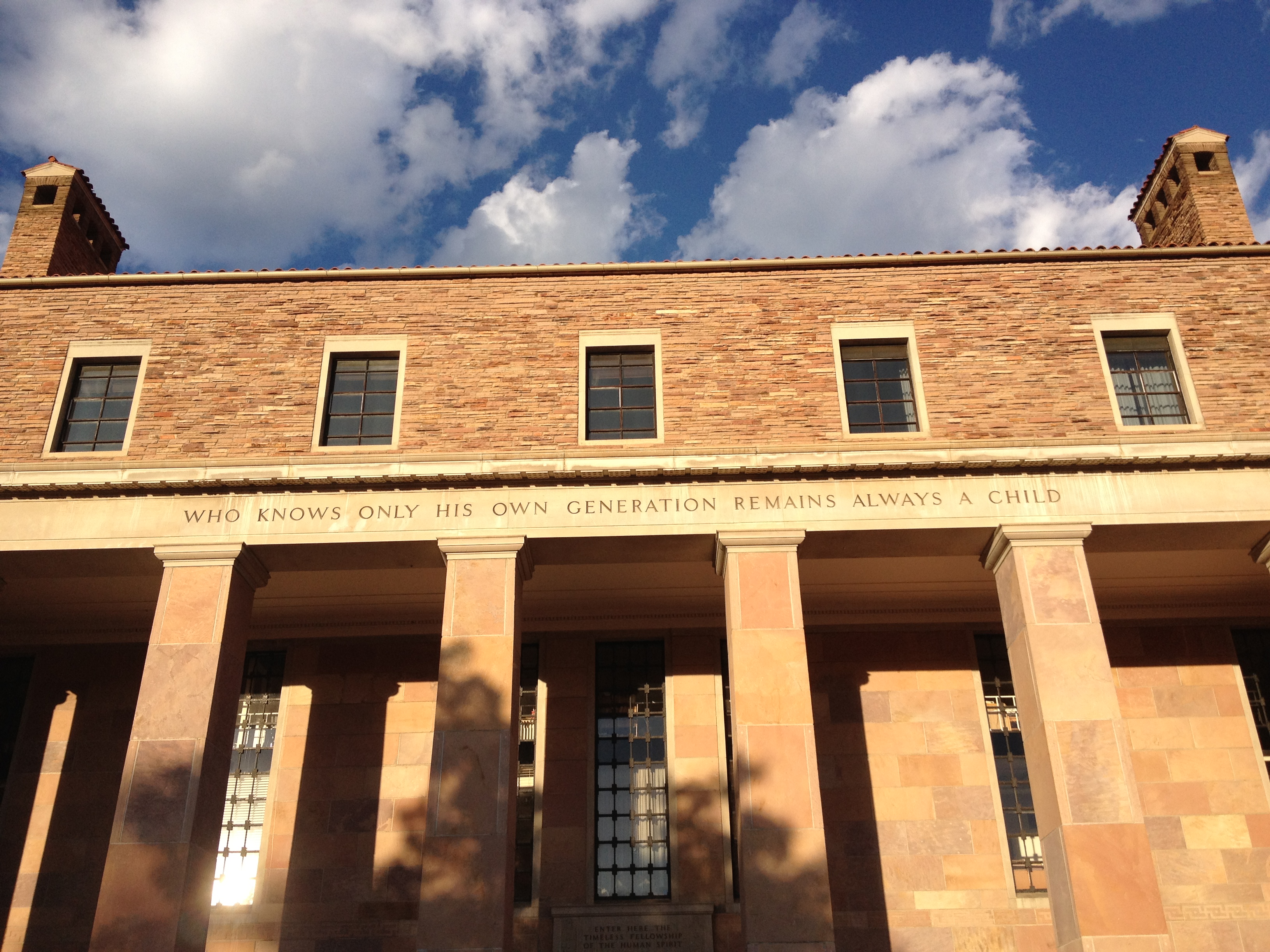
As I was visiting the Rocky Mountain Institute in Boulder, Colorado last week, a friend kindly showed me around the University of Colorado campus. My eye was caught by the quote on the face of the library. When you think about it, time plays the role of a very strong filter on century-old pieces of literature, art of music that are still recommended.

Image

As the urgency of books on best-seller lists fades with time, only the truly good, beautiful and truthful books will keep being recommended. That’s the beauty of diving into old books: it takes a lot more effort to read, but you will find very deep sentences on each page, forcing you, the reader, to think about the truth contained in them.

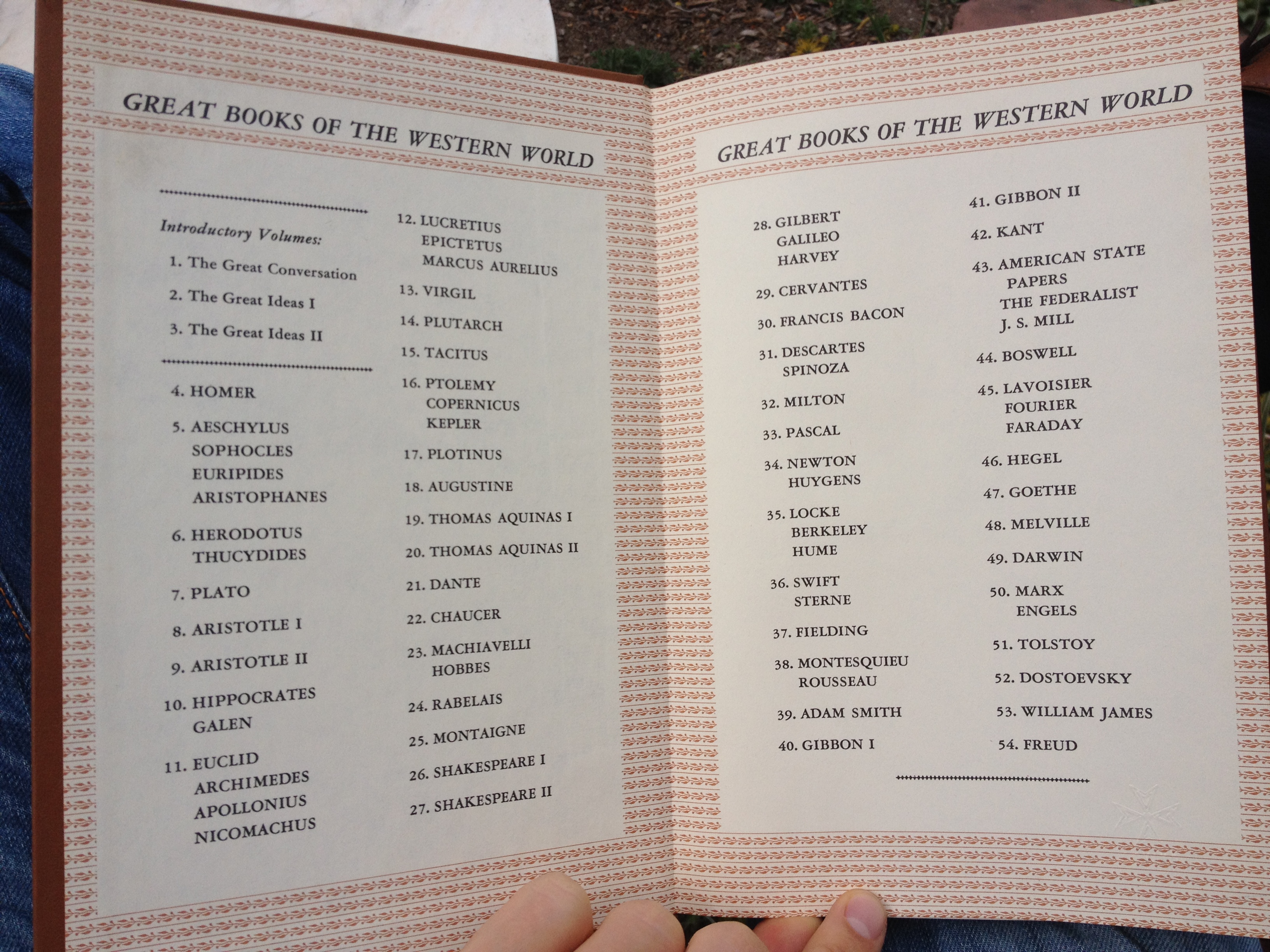
From that perspective, I would like to share with you an index of great books I recently stumbled upon, mentioning some of the best works of the past 2500 years. We should all take more time to actively read these. I have found that the most valuable way of reading the classics is to stop after every other sentence, to try to think of (counter-)examples of your own life that (dis-)prove the truth of the matter. It is slow, but meaningful. If you want to recommend a book, or discuss a certain topic, please do reach out to me.

Unknown's avatar

[MIT Entrepreneurship Review] Building Energy Audits: In The Field Or Virtual?

Original article appeared on MIT Entrepreneurship review [http://miter.mit.edu/article/building-energy-audits-field-or-virtual]

Cleantech investors have high hopes for the nexus of software and energy—sometimes dubbed “cleanweb,” a term coined by Sunil Paul of Spring Ventures—after disappointing returns on many cleantech investments. Although companies in renewable energy generation and storage are critical for our energy industry to change, innovative software combined with smart business models can have significant impact on our energy consumption. Companies like Zipcar, EnerNOC and OPower reach percentage points of energy savings, without ever constructing a new type of energy generation system.

Given the power of software, where can one most effectively reduce energy consumption? As buildings account for 40% of total U.S. energy consumption, the built environment is a good place to start. But not only for environmental reasons. Energy efficiency is a vast economic opportunity for property owners and service providers, worth $1.2 trillion in this decade, as stated by McKinsey’s 2009 report on energy efficiency.

This huge economic opportunity can be tapped only by first analyzing where energy is used inefficiently—a role that has been traditionally fulfilled by energy auditors, who walk through buildings looking for energy saving opportunities. Armed with only pen and paper, the industry is ready for technological innovation. Two types of companies are trying to bring disruption: companies that build software to help auditors input and process building data and companies that eliminate the auditor altogether by producing virtual assessment software.

kWhOURS, a Boston-based company, falls within the first category. kWhOURS builds an iPad application for energy auditors, to enhance the experience of data collection in the field and to store all collected data in the cloud. From there, energy engineers—the people calculating potential energy savings—can access the data directly. The data is used as an input for energy modeling tools, with the goal to calculate the effects of energy conservation measures—so-called ECMs. kWhOURS finds its customers in the countries’ biggest 50 energy service companies (ESCOs) who make up 23% of the total retrofit market.

A slightly different approach is taken by EcoInsight. Like kWhOURS, EcoInsight produces software tools for energy auditors. The key difference between the products is that EcoInsight eliminates the need for engineers to manually compute and model the energy consumption of a building. The obvious advantage is that this saves engineering work, but can be to a disadvantage as many engineers prefer or even demand to use their own modeling tools. Unlike kWhOURS, EcoInsight’s tool is free.

Virtual energy audits take a different approach. Companies like FirstFuel and Retroficiencyoperate on the premise that through smart analysis of energy data, most opportunities for energy savings can be found without ever physically touching a building. Based on 15 minute interval energy data, weather data and geographical information, virtual energy audits estimate the opportunities for energy savings. Virtual audits have an obvious benefit: no longer do auditors need to roam around buildings for days on end, only to suggest energy conservation measures that could have been found through automated analysis.

FirstFuel is a key player. Founded by Swapnil Shah, a veteran-IT-entrepreneur, FirstFuel recently raised $10 million from Rockport Capital, Nth Power and Battery Ventures. Through its algorithms, FirstFuel is able to analyze opportunities for energy savings, and recommend both operational and retrofit opportunities. This is important, as no-cost operational measures, such as automatically switching off lights when employees go home, are often missed by traditional retrofitters.

Retroficiency holds a firm two-legged stand. Not only does the company offer a “Virtual Energy Assessment,” Retroficiency also offers “Automated Energy Audit,” a software tool for in-the-field auditors. Thereby, Retroficiency holds the potential both to scan large portfolios of buildings as well as deliver in-depth analyses.

Who will win the battle? Today, onsite energy audits exist side-by-side virtual assessments as both products have different value propositions. Virtual audits can not yet deliver the same level of granularity—and hence potential energy savings—as an in-field auditors offer. In order for an ESCO to identify all energy savings opportunities, energy auditors must be deployed. And the most effective way to do so is by arming them with software tools.

However, many real estate owners want a rapid and cheap way of scanning large building portfolios for energy saving potential. With rapidly improving data analysis tools and more data becoming publicly available (through programs like Green Button, virtual assessments are becoming a very interesting product to deliver.

The future is exciting. Whether improved data analysis tools and mapping energy consumption of each device through wireless sensors will eliminate the need for real auditors is to be seen. It is clear that all companies entering the space are adding very real value, as their products were being paid for before fully finished. After all, a $1.2 trillion pie is big enough to share.